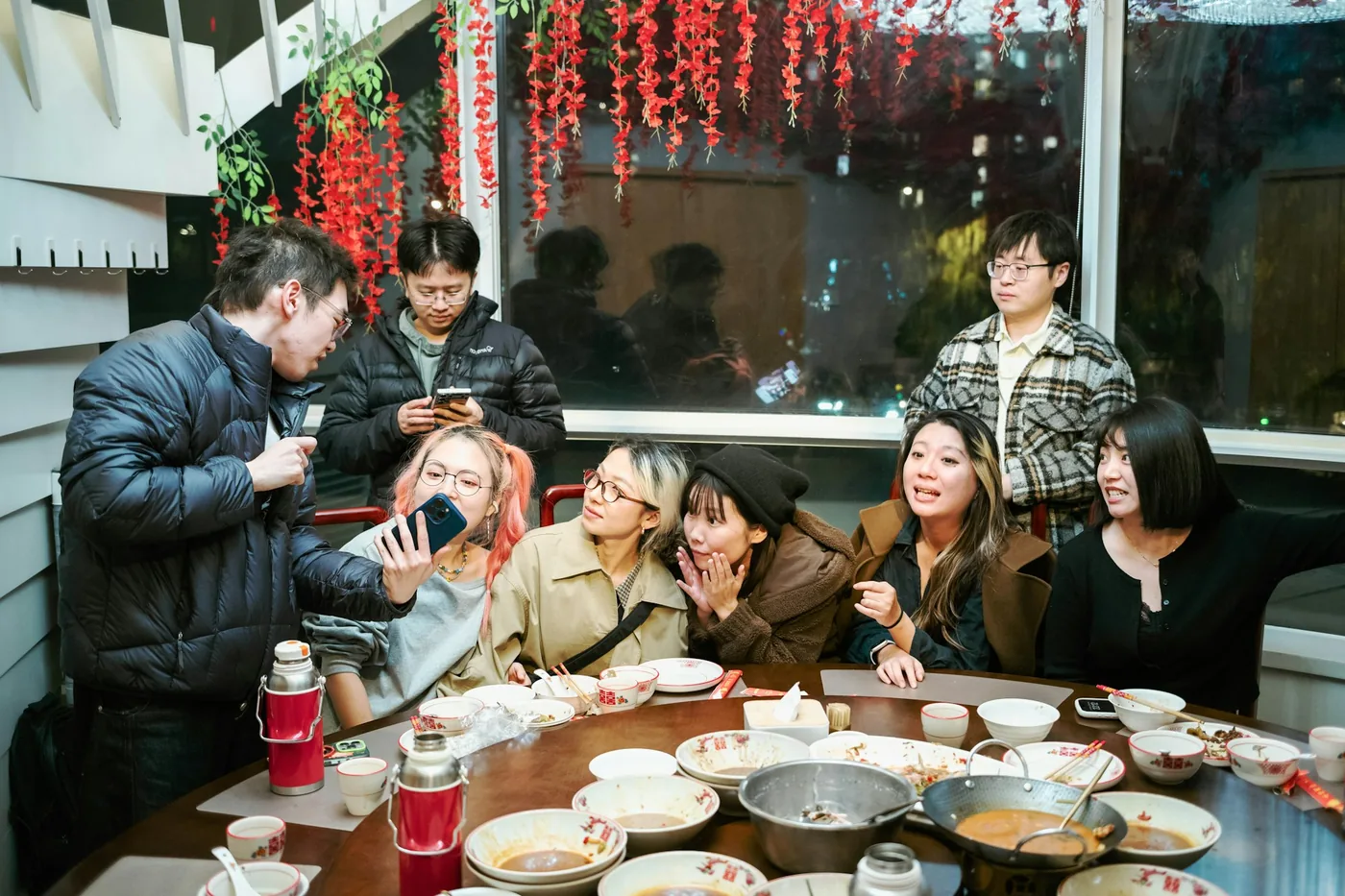
Somebody always ends up organising it. A team lunch, a family gathering, a house full of people who have not eaten. Chinese food is one of the best things to order for a group and one of the easiest to get wrong, and almost all of the difficulty is logistics rather than menu.
The short answer
Collect the order in writing before you call, order shared dishes rather than one plate each, and place it well before the rush. Everything else follows from those three.
Order for the table, not for each person
This is the mistake that costs the most money and produces the most leftovers. Chinese food is built around shared dishes at the centre of the table rather than individual plates, and ordering it as if everyone needs their own main is both expensive and slightly missing the point.
That style is not an accident. Shared serving is central to how Chinese meals are traditionally eaten, and the menu is built for it: most dishes come in a large size specifically so they can go in the middle.
The practical rule from the guide to how much to order holds here — think in dishes per table, not dishes per head.
Collecting the order
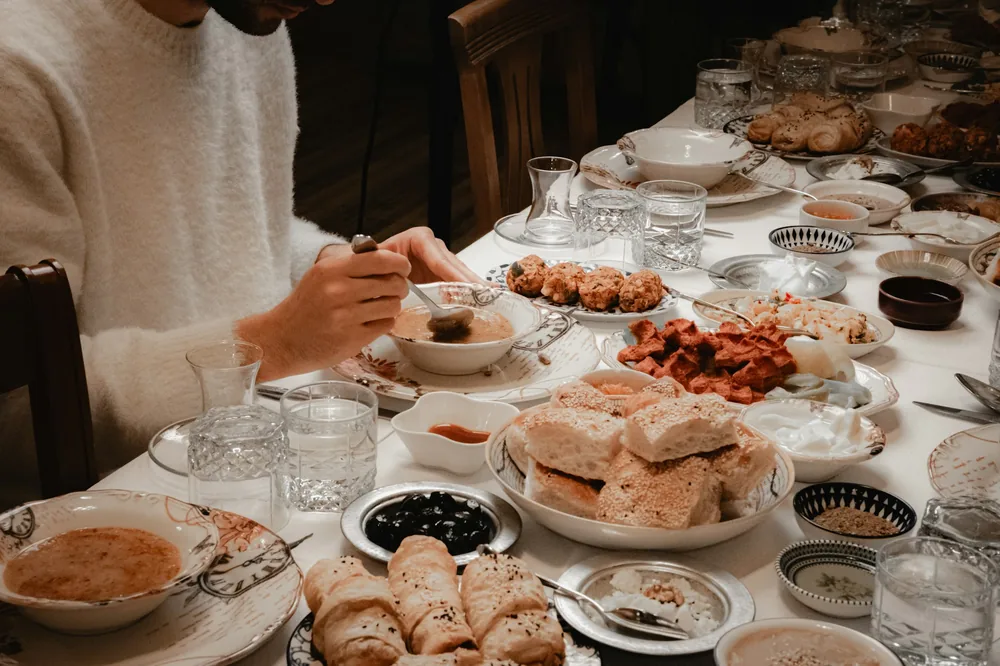
The part that actually goes wrong. Eight people replying in a group chat over two hours produces an order nobody can read back.
- Send the menu link, not a question. “What does everyone want?” invites vagueness; a menu invites choices.
- Ask for item numbers. Chinese menus are numbered for exactly this reason, and a number cannot be misheard the way a dish name can.
- Set a cut-off time and say what it is. Late replies get whatever the table is having.
- Write the final list down in menu order — appetizers, then rice and noodles, then entrées. That is the order the kitchen will take it in.
- Read it back on the phone before you hang up.
If the vocabulary is slowing people down, the menu glossary is a useful thing to send along with the link.

What to actually order
A structure that works for most groups, scaled to size.
| People | Starters | Rice or noodles | Entrées |
|---|---|---|---|
| 4–6 | 2 shared | 1–2 large | 3 |
| 7–10 | 3 shared | 2–3 large | 4–5 |
| 10–15 | 4 shared | Family size rice | 6–7 |
| 15+ | 5 or more | Family size, plus noodles | 8 or more |
For the starch specifically, this menu lists Family Fried Rice by the half gallon and by the gallon, which is far more efficient for a crowd than stacking up large containers. The guide to which fried rice to order covers the versions.
Covering everyone
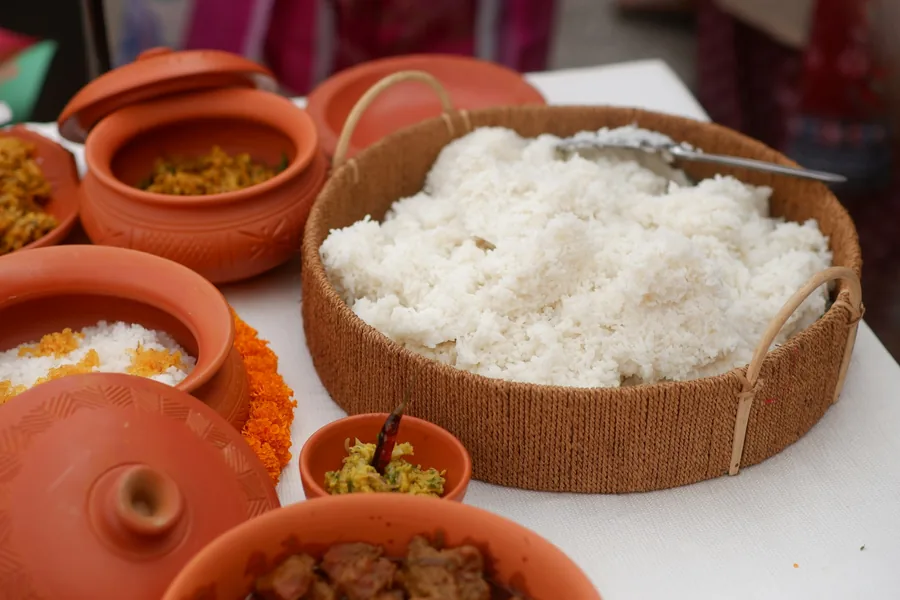
A group order fails when one person cannot eat any of it. Four categories cover almost every table.
- Something with no chilli. Check the spicy markings rather than guessing — the words that signal heat are not always obvious.
- Something meat-free. The vegetable section, plus a vegetable rice or noodle — ordering vegetarian covers what to ask.
- Something plain and familiar for anyone hesitant.
- Something for anyone who does not want Chinese food at all. That is what the wings and fries section is for.
If anybody has an allergy, that is a separate conversation with the kitchen rather than a line in the order — the guide to allergies and Chinese takeout explains why.

Splitting the cost without a spreadsheet
The other thing that sours a group order. Once the food is shared, working out who owes what for a dish four people ate is a poor use of an evening.
- Split the shared dishes evenly and settle anything genuinely individual separately. It is close enough and it is quick.
- Say the split up front, when you send the menu, rather than discovering it at the end.
- Collect before you order for a large group, so one person is not fronting a substantial bill.
- Round up rather than down. The organiser usually ends up short otherwise.
For a rough figure per head before you order, the value guide covers where the menu goes furthest.
Timing a large order
A big order is not a normal order with more items in it. It occupies the kitchen for a stretch, and when you place it changes how long it takes far more than it would for a single dish.
Mid-afternoon is the best window, and the hour before the dinner rush is the next best. Dropping fifteen items into a kitchen at seven on a Friday is the slowest possible version of the same order. When to order covers the pattern across the day.
The two things groups always forget
Drinks and leftovers. Both are trivial to sort out in advance and annoying to discover afterwards.
Soft drinks on this menu come by the can and by the two litre bottle, and bottles are the sensible unit once you are past four or five people. And a group order almost always produces leftovers, so it is worth deciding before you order whether that is deliberate — large sizes of the things that reheat well, rather than more of everything. The guide to storing and reheating covers what survives the night.
A related case worth knowing: sending an order to somebody else entirely. How to send someone a meal covers what to ask them first.
Collecting and serving it
- Take somebody with you if it is more than two bags.
- Check the bag against the list at the counter, not at home.
- Keep it flat in the car. Paper containers are only leak-resistant upright.
- Open the fried things first when you arrive and let the rest wait.
- Serve from the containers rather than plating up — it is faster and it is how the food is meant to be eaten.
Frequently asked questions
How do you organise a Chinese takeout order for a group?
Collect everyone’s choices in writing before you call, using the menu item numbers. Order shared dishes rather than one plate each, and place the order well before you want to eat.
Should everyone order their own dish?
Usually not. Chinese food is designed to be shared, so a smaller number of larger dishes feeds a group better than one dish per person and costs less.
What sizes work best for a group?
Large sizes for the entrées, and the family sizes for rice. This menu lists Family Fried Rice by the half gallon and by the gallon, which is the efficient way to cover the starch for a crowd.
How far ahead should a large order be placed?
Well before the rush. A big order dropped into a kitchen at seven on a Friday will take much longer than the same order placed mid-afternoon.
The bottom line
Get it in writing with item numbers, order for the table rather than for each person, use the family sizes for rice, place it before the rush and check it at the counter. The menu is the easy part.
Large and family sizes are listed throughout the menu.
Browse the full menu