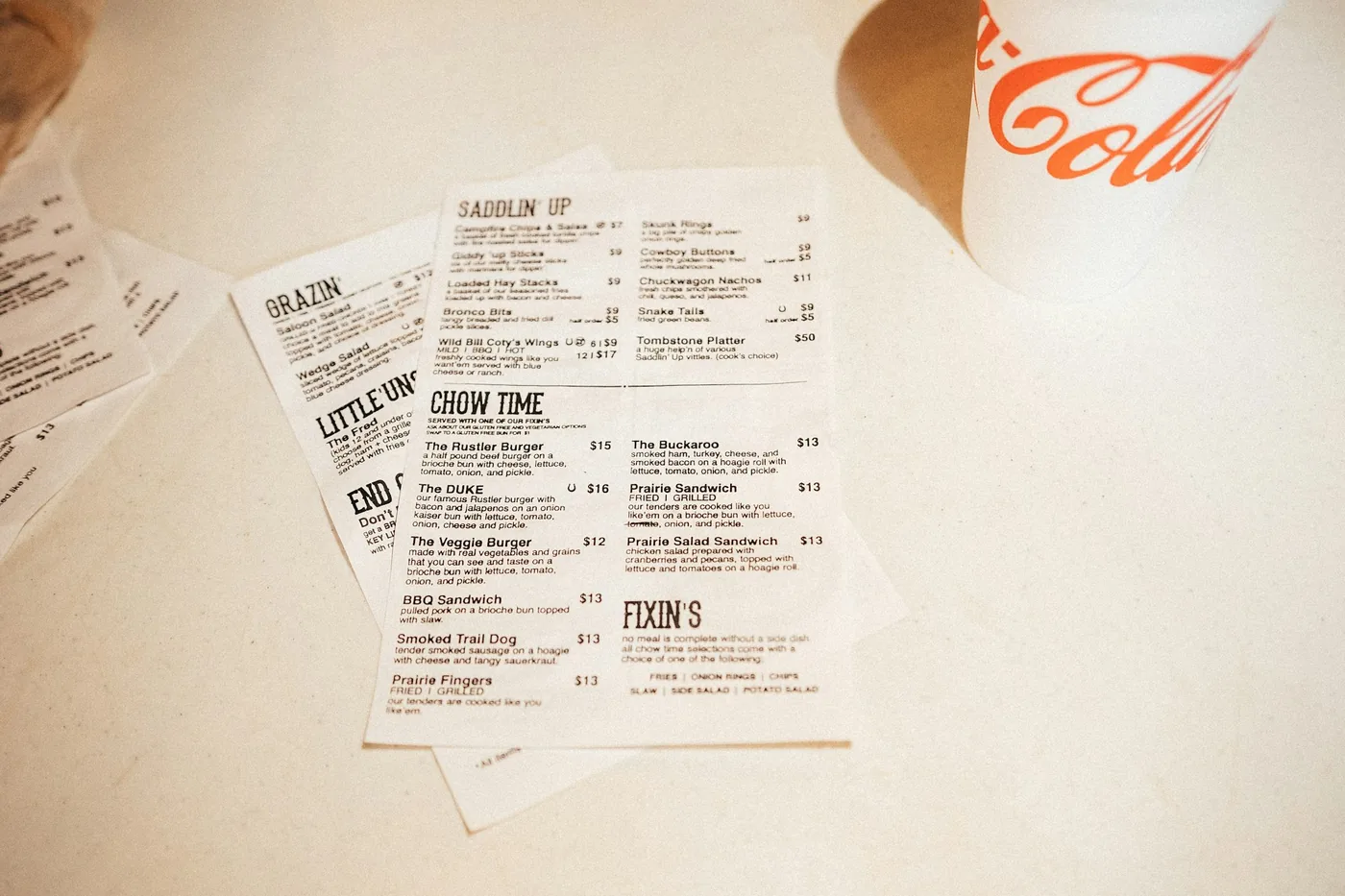
A Chinese takeout menu can run to nearly three hundred items across twenty sections. If you have not grown up ordering from one, that is genuinely hard to navigate — and most guides answer a different question, explaining how to order food while travelling in China rather than how to read the menu at your local takeout counter.
This is the second one.
How the menu is organised
Almost every American Chinese menu follows the same structure, and once you see it the length stops being intimidating. The sections are not random — they are grouped by cooking style or by protein.
- Appetizers — egg rolls, dumplings, ribs, things to share before the meal.
- Soups — usually sold in two sizes, meant to start the meal.
- Rice and noodle sections — fried rice, lo mein, chow mein, mei fun. Grouped by starch, then by protein.
- Preparation sections — chop suey, egg foo young, sweet and sour. Each is one cooking method offered with several proteins.
- Protein sections — beef, chicken, pork, seafood, vegetables. Each lists that protein cooked several different ways.
- House specials — the kitchen’s signature dishes, often larger or more elaborate.
- Combination plates — lunch and dinner specials that bundle an entrée with rice and a side.
That means the same dish appears in more than one place. Chicken lo mein sits in the noodle section, not in the chicken section. Beef with broccoli sits under beef. Once you know which axis a section is organised on, finding things gets much faster.
Five dishes that are easy first orders
1. Chicken with broccoli
Sliced chicken and broccoli in a light brown sauce. Mild, recognisable, and a good measure of a kitchen — there is nowhere to hide in a dish this simple.
2. Chicken lo mein
Soft wheat noodles tossed with chicken and vegetables. Comforting, easy to eat, and a complete meal in one container.
3. Sweet and sour chicken
Battered chicken with a sweet, tangy sauce, usually served on the side so you control how much goes on. Reliably popular with people trying Chinese food for the first time.
4. House special fried rice
Fried rice with more than one protein through it. Substantial enough to be dinner on its own and easy to share.
5. Egg drop soup
The mildest thing in the soup section. A small one is a gentle way to start a meal without committing to a strong flavour.
How the sizes work
The other thing that confuses first-time orders is sizing. Most entrées on a Chinese menu come in a small and a large, and the difference is bigger than the words suggest.
A small is roughly one person’s serving. A large is closer to two. So a table of four does not need four large dishes — two or three, shared, is usually right. Getting this wrong is the single most common reason people end up with far more food than they wanted.
Menu words worth knowing
| Term | What it usually means |
|---|---|
| House special | Contains more than one protein, often chicken, pork, beef and shrimp |
| Chop suey | Meat and vegetables in a light sauce, served over rice. No noodles |
| Egg foo young | Egg patties with a filling, served with gravy and rice |
| Lo mein | Soft wheat noodles, tossed with sauce |
| Chow mein | Fried wheat noodles, drier; often served with rice on American menus |
| Mei fun | Thin rice noodles, stir fried and light |
| Moo shu | Shredded stir fry traditionally eaten wrapped in thin pancakes |
| Szechuan / Hunan | Regional styles that usually indicate heat |
| Small / large | Roughly one serving versus roughly two |
If you do not want heat
Heat is usually signposted. Dishes are often marked spicy on the menu, and section or dish names containing Szechuan or Hunan generally indicate a spicier style. Garlic sauce and curry dishes can carry heat too, depending on the kitchen.
Safe territory is broad: broccoli dishes, sweet and sour, lo mein, fried rice, egg foo young, moo goo gai pan and most of the chicken section. If you are unsure about a specific dish, ask — it is a normal question and staff answer it constantly.
Building your first order
A first order for two people that covers a lot of ground without over-committing:
- One small soup each, or one shared appetizer.
- One mild entrée that comes with rice.
- One noodle dish to share.
That gives you a soup or starter, a sauced dish with rice, and a noodle dish — three different textures and a fair sample of what the kitchen does. If you like all three, you have a baseline to order from next time.
Where to look on this menu
At Panda Li’s Kitchen in Orlando, the full menu is split into the sections described above. For a first order, the chicken section and the lo mein section are the easiest places to start, and the dinner specials bundle an entrée with pork fried rice and an egg roll or soup, which takes the guesswork out of sizing.
Even the packaging has a longer history than it looks — the folded white box began life carrying oysters.
And when you want to go further than a first order, the full index of guides is arranged by what you are trying to work out.
A word on what this food is
It is worth knowing that Chinese-American cooking is a tradition in its own right rather than a watered down version of something else. It grew out of Cantonese cooking carried to the United States in the nineteenth century and adapted over generations. The Britannica overview of Chinese cuisine gives useful context on the regional traditions those dishes came from.
Frequently asked questions
What is the safest thing to order at a Chinese restaurant?
Chicken with broccoli, chicken lo mein or a sweet and sour dish are all mild, familiar and widely liked. If you want something crisp and sweet without heat, orange chicken or sesame chicken are dependable.
What should I avoid if I do not like spicy food?
Look for dishes marked spicy on the menu, and be cautious with anything labelled Szechuan or Hunan, which are styles that usually carry heat. Hot and sour soup is more sour than hot but still assertive.
Is Chinese-American food real Chinese food?
It is its own tradition. Dishes like chop suey and General Tso’s chicken were developed by Chinese cooks working in the United States, using Chinese technique adapted to local ingredients and tastes. That makes them genuinely Chinese-American rather than either fake or identical to food in China.
What does “house special” mean on a Chinese menu?
It usually means the dish contains more than one protein — often a combination of chicken, pork, beef and shrimp. House special fried rice and house special lo mein are the most common examples.
The bottom line
Read the menu by section, start with one mild entrée and one noodle dish, and ask about heat if you are unsure. That is genuinely all it takes to order well the first time.
Once you have a first order under your belt, the two decisions that come up most often are lo mein versus chow mein and how much to order for the number of people eating.
One last thing worth knowing before you order: if you have ever tried to make a stir fry at home and wondered why it tasted nothing like takeout, the difference is mostly heat.
Browse the full menu by section and see what each part of the kitchen does.
Explore the menu