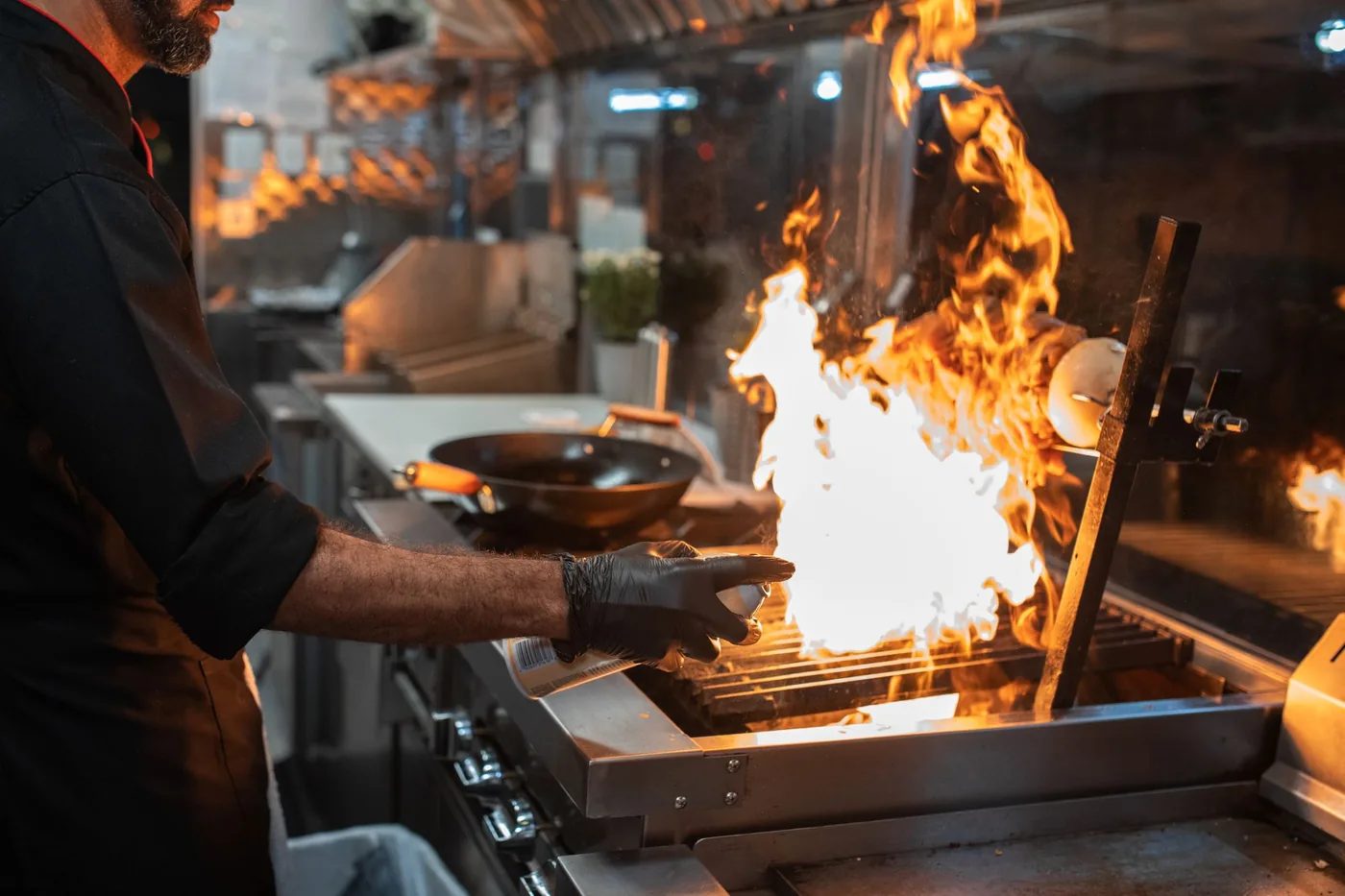
Anyone who has tried to make a stir fry that tastes like the one from a Chinese restaurant has run into the same wall. The ingredients are right, the sauce is close, and the result is still recognisably homemade. It is not a secret ingredient. It is the equipment.
The short answer
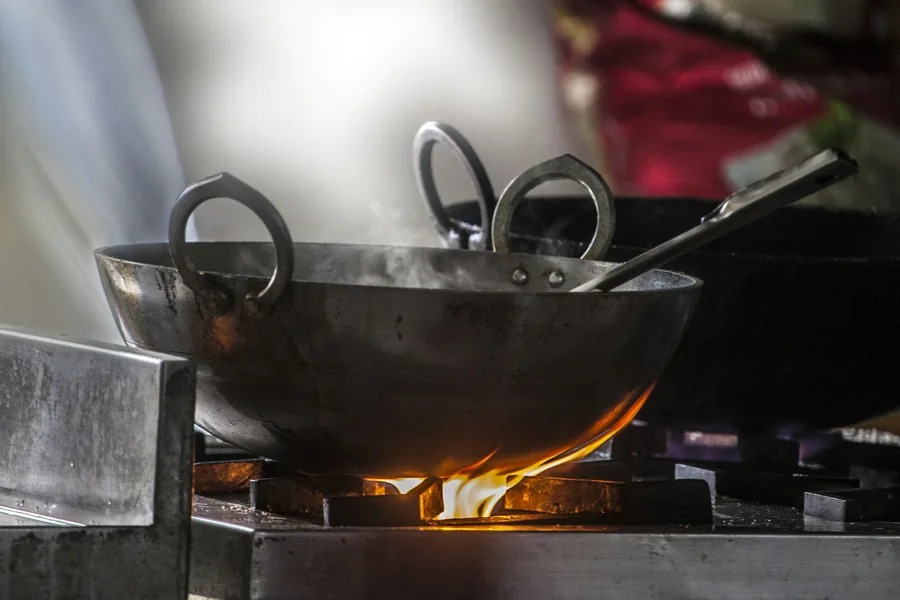
A restaurant wok burner runs far hotter than any domestic hob, and that heat produces a seared, faintly smoky quality that a home kitchen struggles to reach. The Cantonese term for it is wok hei, usually translated as the breath of the wok.
What wok hei actually is
It is not one flavour so much as a set of things happening at once. At very high heat, moisture leaves the surface of the food almost instantly, browning reactions happen in seconds, and traces of oil vaporise and settle back onto the ingredients.
The result is food that is seared rather than stewed: dry at the surface, still juicy inside, and carrying a faint smokiness that has nothing to do with smoke being added. It is as much a texture as a flavour.
The heat gap
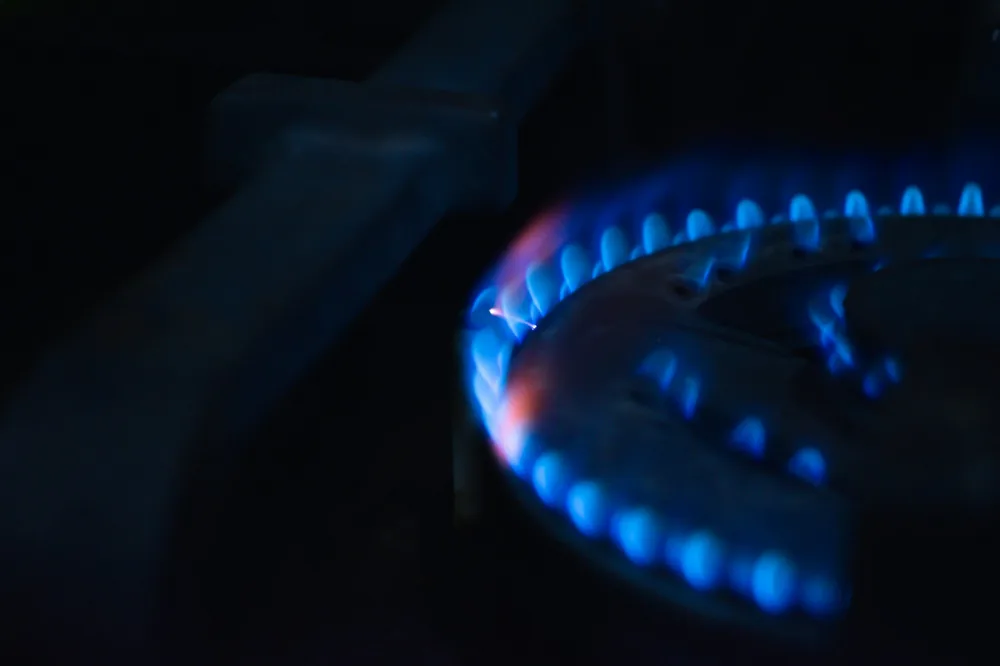
This is the part that surprises people. A commercial wok range is built for one job and delivers heat on a scale a home cooker is not designed for. The wok itself is thin carbon steel, so it responds to that heat almost instantly rather than holding it slowly like a heavy pan.
On a domestic hob, adding cold ingredients to a pan drops the temperature and it takes time to recover. In that time the food releases moisture and begins to stew in it. That is the fundamental difference, and no amount of technique fully closes it.
What else the kitchen does differently
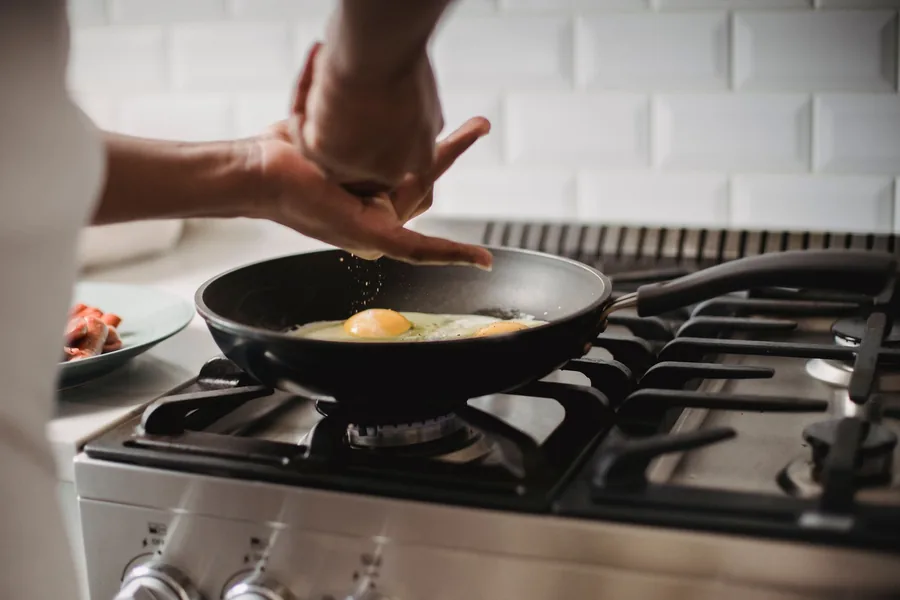
Heat is the main factor but not the only one. Several habits of a professional kitchen matter too, and some of them are worth borrowing.
- Everything is prepped first. A stir fry takes ninety seconds. There is no time to chop anything once cooking starts, so every ingredient is cut, measured and lined up in advance.
- Ingredients are cut to cook evenly. Thin, uniform slices are not aesthetic — they are what allows everything to be done at the same moment.
- Proteins are treated before cooking. A coating step, often called velveting, helps meat hold moisture through high heat.
- The pan is not crowded. Too much food at once drops the temperature and steams rather than sears.
- Sauce goes in last. Added at the end and thickened in seconds, so it coats rather than simmers.
Restaurant against home, side by side
| Restaurant kitchen | Home kitchen | |
|---|---|---|
| Burner | Purpose-built high-output wok range | Domestic hob |
| Pan | Thin carbon steel wok | Usually a heavier flat pan |
| Heat recovery | Almost immediate | Slow after cold food goes in |
| Cooking time | Seconds to a minute or two | Several minutes |
| What happens to moisture | Driven off on contact | Released and pooled |
| Result | Seared, faintly smoky, distinct textures | Softer, more uniform, more stewed |
Why this is worth knowing as a customer
Two practical reasons. The first is that it explains which dishes are worth ordering rather than making — anything that depends on searing and texture is exactly what a home kitchen struggles with, which is most of the stir fried menu.
The second is that it explains why some dishes travel better than others. The qualities that come from high heat are also the ones that fade fastest in a closed container, which is why fried and seared dishes are best eaten soon and saucy ones are more forgiving. The comparison of delivery and pickup covers that in detail.
What you can borrow at home
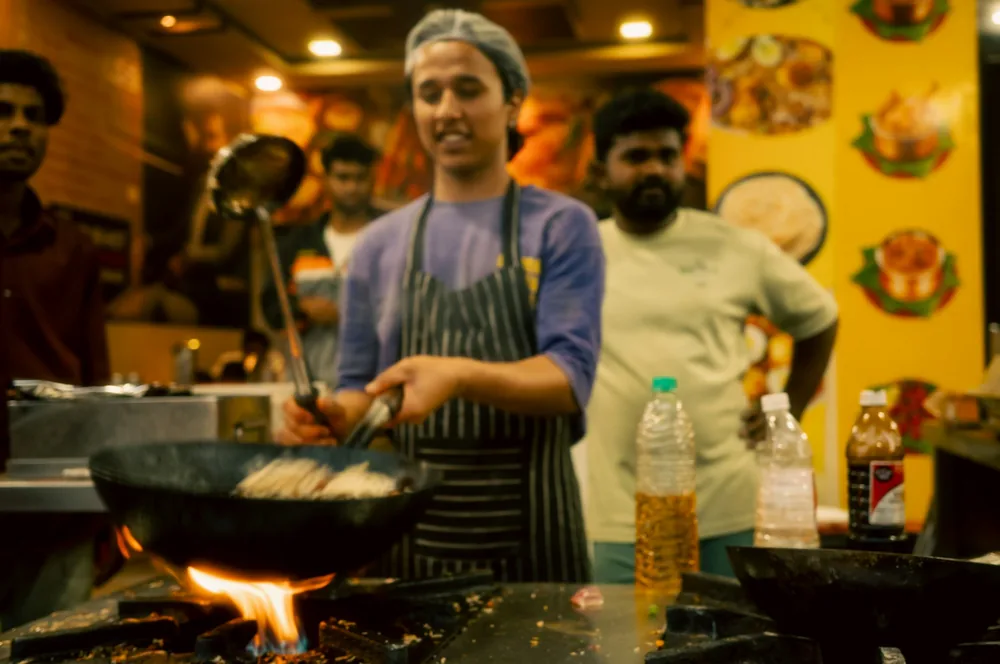
You will not match a commercial burner, but several of the habits transfer and make a genuine difference.
- Prep everything before you start. The single biggest improvement, and it costs nothing.
- Cook in smaller batches. Crowding the pan is the most common home mistake.
- Get the pan properly hot before anything goes in. Hotter than feels comfortable.
- Dry your ingredients. Surface water has to boil off before anything can brown.
- Add sauce at the very end rather than cooking in it.
The one thing you cannot borrow
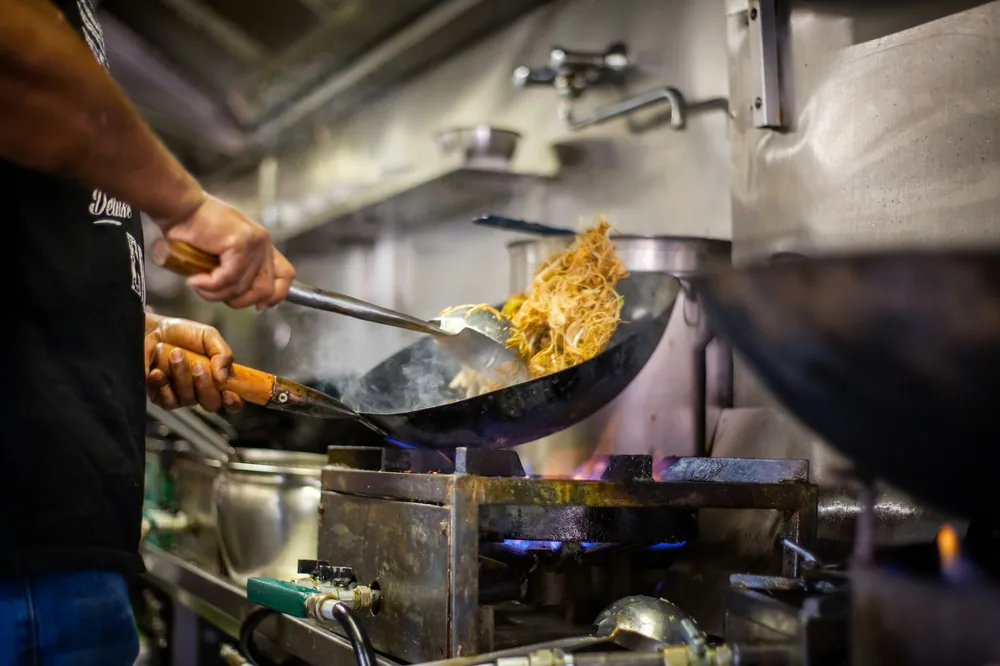
Ventilation, oddly enough. A commercial wok range sits under extraction built to handle the smoke that cooking at those temperatures produces. A home kitchen cannot run that hot for long even with a good pan, because there is nowhere for the smoke to go.
It is a small point but it explains why advice to simply turn the heat up further tends to end in a smoke alarm rather than better food.
Where the term comes from
Wok hei is Cantonese, and the concept is closely associated with Cantonese restaurant cooking in particular, where speed over very high heat is central to the style. The background on the wok covers how the pan itself developed and why its shape suits the technique.
If you want to see the range of dishes that depend on it, essentially all of the stir fried sections of the menu qualify — the beef, chicken, pork, seafood and vegetable dishes are all cooked this way, as are the lo mein and fried rice sections.
Frequently asked questions
What is wok hei?
A Cantonese term usually translated as the breath of the wok. It describes the faintly smoky, seared character that comes from cooking in a wok over extremely high heat, and it is difficult to reproduce on a domestic hob.
Why can I not make Chinese food taste like takeout at home?
Mostly heat. Restaurant wok burners run far hotter than a domestic hob, which sears food quickly instead of slowly stewing it. Preparation habits and technique matter too, but heat is the main gap.
Does it matter what pan I use?
It helps. A thin carbon steel wok responds to heat changes quickly and produces the sloping shape the technique depends on. But a good pan on a weak burner will still not reach restaurant temperatures.
Is wok hei just about smokiness?
Not only. It is the combination of searing, rapid moisture loss and browning happening in seconds rather than minutes, which changes the texture of the food as much as the flavour.
The bottom line
The difference is heat, not secrets. A restaurant wok burner sears food in seconds where a home hob slowly stews it, and the seared, faintly smoky result is what people are recognising when they say takeout tastes different. Prep, small batches and a very hot pan close some of the gap.
Almost everything on the menu is cooked to order in the wok.
See the full menu