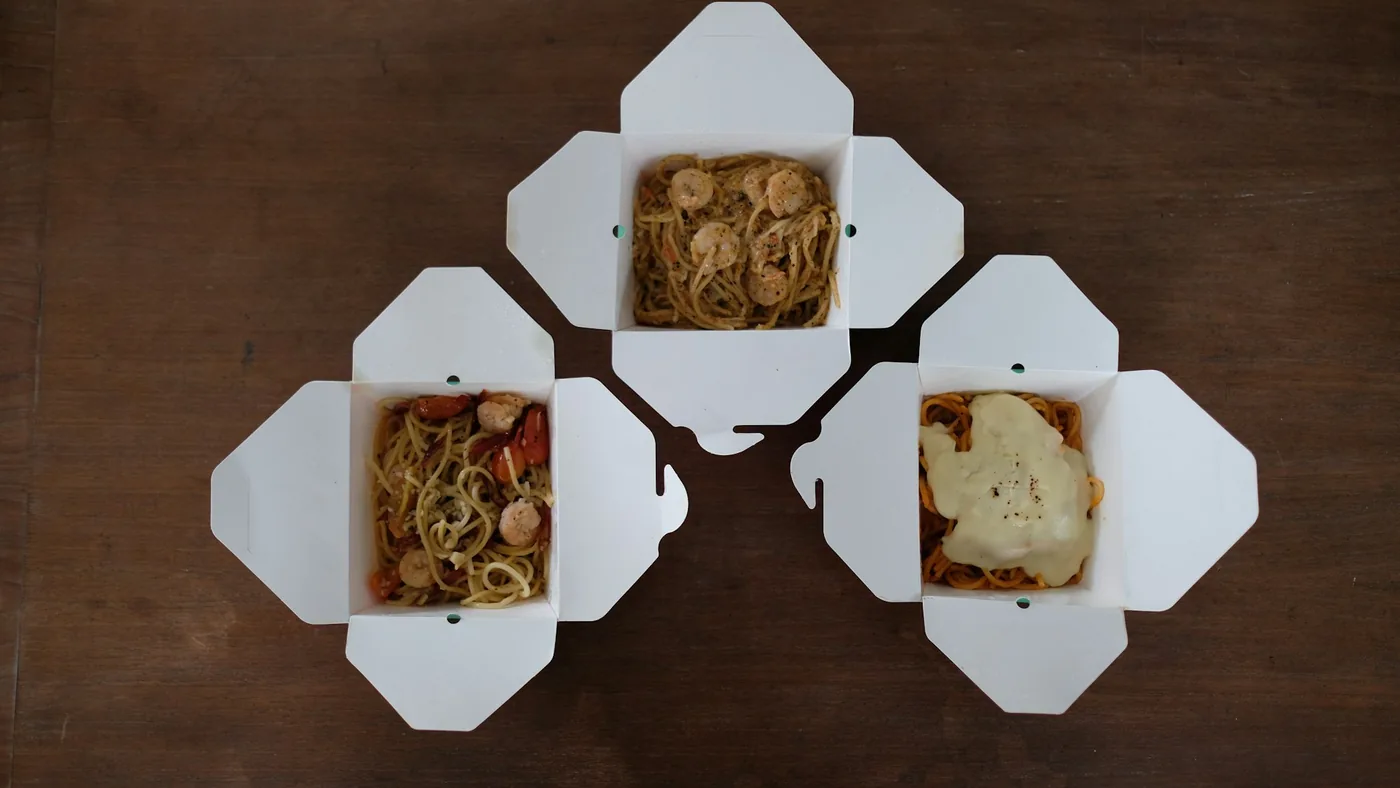
If you had to draw Chinese takeout in one image, you would draw the box: white folded paperboard, a thin wire handle, usually a red pagoda printed on the side. It is on television, in films and in the emoji keyboard. It is also, in every meaningful sense, not Chinese.
The short answer
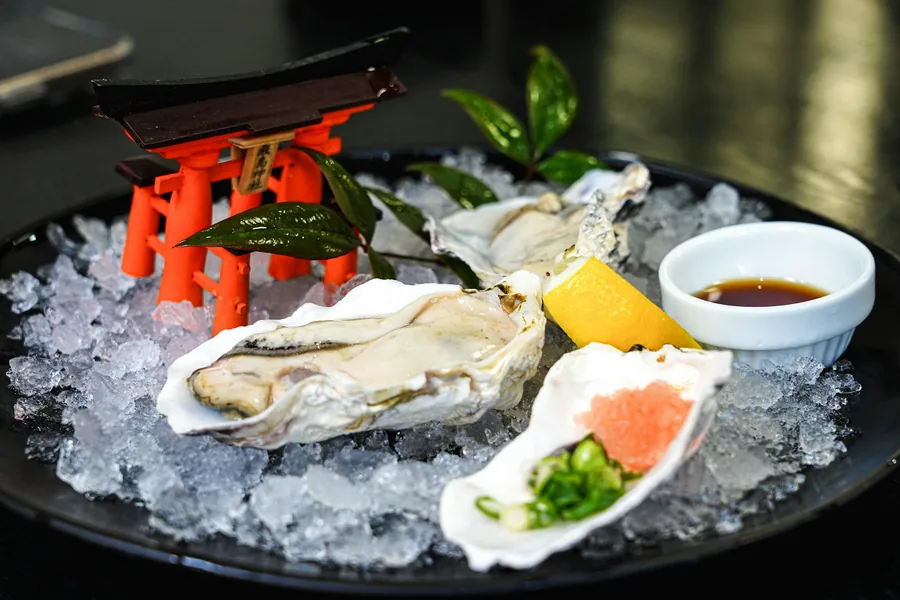
It was an oyster pail. The container was patented in the United States around the turn of the twentieth century to carry fresh shellfish home from the fishmonger, and Chinese restaurants adopted it decades later because it was cheap, sturdy and available.
Where it came from
Oysters were once cheap and enormously popular in American cities, but they needed shucking, and shucking is a skill. The solution was for the seller to open them and send the customer home with the meat in a leak-resistant paper container. Early patents for that container date to 1890, 1894 and 1908.
The design is a single sheet of coated paperboard, creased and folded so it holds its shape without glue, closed with a wire handle. It is genuinely clever: leak-resistant standing upright, cheap to make, flat to store, and it lets steam out rather than trapping it entirely.
How it became Chinese
Two things happened at once after the Second World War. American oyster consumption fell, leaving manufacturers with a container and no market. And Chinese restaurants in American cities were doing more and more business in food eaten at home.
The pail turned out to suit that food almost perfectly. It held rice and noodles well, coped with sauced dishes, and stacked into a paper bag. It was already being made, so it was cheap. The match was practical rather than cultural, and it stuck.
The red pagoda and the calligraphic lettering came later still, added by American packaging designers. By the time the Smithsonian put a takeout container into an exhibition on Chinese food in America, the association was complete — a container invented for oysters had become the symbol of a cuisine.
What it does to your food
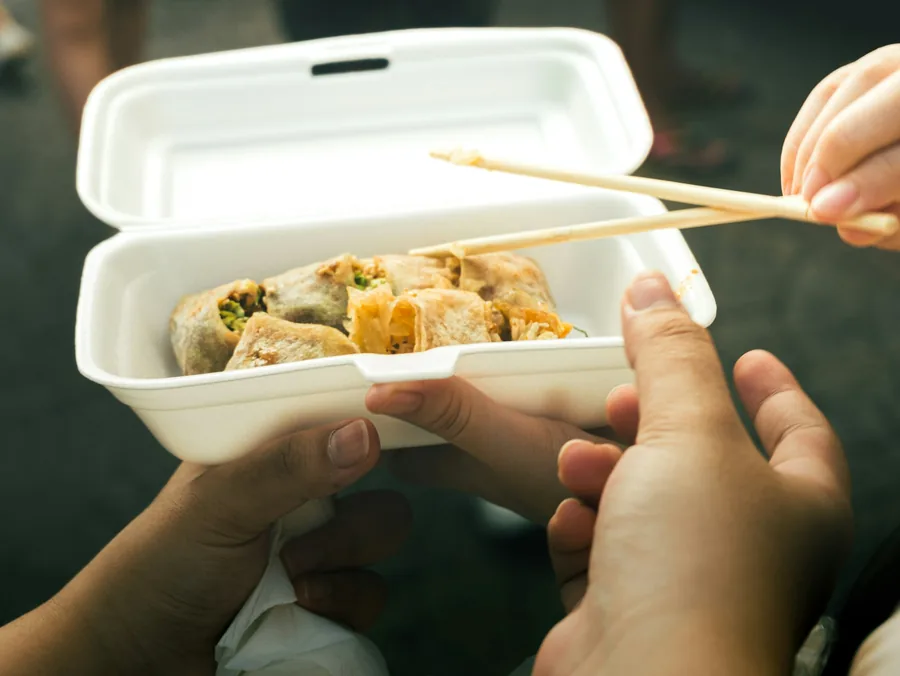
This is the part that is still useful rather than merely interesting. The pail was designed to carry cold shellfish a short distance, not to hold hot fried food for half an hour, and that shows.
| Dish type | How the container treats it |
|---|---|
| Rice | Well — it holds heat and does not compact |
| Noodles | Well, though they keep absorbing sauce |
| Sauced dishes | Fine upright; less fine on their side |
| Fried and battered food | Badly — trapped steam softens the coating |
| Soup | Not at all, which is why soup comes in a tub |
That last row explains the split you see in a modern takeaway bag: the paper pail for the dry things and a sealed plastic tub for anything liquid.
Why plastic took over
Most Chinese takeout today does not arrive in the folded box at all. It arrives in a plastic tub with a snap lid, and there are good reasons for that: it seals properly, it stacks flat in a delivery bag, it goes in the fridge and the microwave, and it survives being carried on its side.
The paper pail has held on mainly for rice and noodles, and as an image. It is worth noticing which one your order arrives in, because the container tells you something about how the food will keep — the guide to storing and reheating leftovers goes into what to do next.
What this means for your order
- Unpack it the moment it arrives. Anything fried is losing crispness every minute the lid is on.
- Keep the bag flat. Sauced dishes in paper containers are only leak-resistant upright.
- Ask for sauce on the side if the journey is long — the single most effective request, covered in customising an order.
- Eat the fried things first and let the rice and noodles wait. They will be just as good in ten minutes.
The comparison of delivery and pickup covers which dishes suffer most on the journey and which are unaffected.
It never travelled home
The strangest part of the story is the geography. The folded pail is unknown in China, where takeaway food is packed in whatever the local trade uses — plastic tubs, bags, foam boxes. A Chinese diner shown the white box would recognise it from American films rather than from dinner.
It is a symbol that only works in one direction: it says Chinese food to Americans, and it says America to almost everyone else. That is a fair description of the cuisine it represents, which grew up in American cities and is its own thing rather than an imported one.
How to tell what your food arrived in
A modern takeaway bag usually carries three kinds of container, and each one is a hint about the dish inside it.
- A folded paper pail almost always means rice or noodles — something dry enough that a fold is seal enough.
- A sealed plastic tub means sauce, and it means the kitchen expects the bag to be carried rather than balanced.
- A lidded foam or card box usually means something fried, and it is the one to open first.
Once the meal is finished the container has one more decision attached to it — what can actually be recycled covers which parts of the bag belong in which bin.
A small note on the myth
There is a widely repeated claim that the box unfolds into a plate. It does, in the sense that the folds come apart and lie flat, and the interior is smooth enough for food to slide off. Whether that is a design feature or a happy accident of a container meant for shellfish is another question.
It works better as a party trick than as dinner, and it does not work at all once sauce has been sitting in the creases. Worth trying once.
Frequently asked questions
Why is Chinese takeout served in those white boxes?
The container was not designed for Chinese food at all. It was an oyster pail, used to carry fresh oysters home, and Chinese restaurants adopted it after the Second World War when oyster sales fell and the pails were cheap and plentiful.
Are Chinese takeout boxes used in China?
No. The folded paper pail is an American container associated with American Chinese restaurants. It is not a Chinese object.
Why does the box have a wire handle?
It was designed to be carried home from a fishmonger. The handle is a holdover from the container’s original job, and it is also why the box is not meant to hold soup.
Why do restaurants use plastic containers instead now?
They stack, seal and microwave better, and they suit sauced dishes. The paper pail survives mainly for rice and noodles, and as a recognisable symbol.
The bottom line
An American container designed for oysters, adopted by Chinese restaurants because it was cheap and happened to fit, decorated later by packaging designers, and now the single most recognisable symbol of a cuisine it has nothing to do with. It is still bad at holding fried food.
However it is packed, it travels better the sooner you open it.
See how ordering works