Egg roll and spring roll are used almost interchangeably on English-language menus, which is why people are routinely surprised by what arrives. They are genuinely different things, and the difference is easy to see once you know what to look at.
The short answer
An egg roll has a thick, blistered wrapper that fries up crunchy and chewy. A spring roll has a much thinner wrapper that fries lighter and more brittle, or is served fresh and uncooked. Spring rolls originated in China; egg rolls were developed by Chinese cooks in the United States.
The wrapper tells you everything
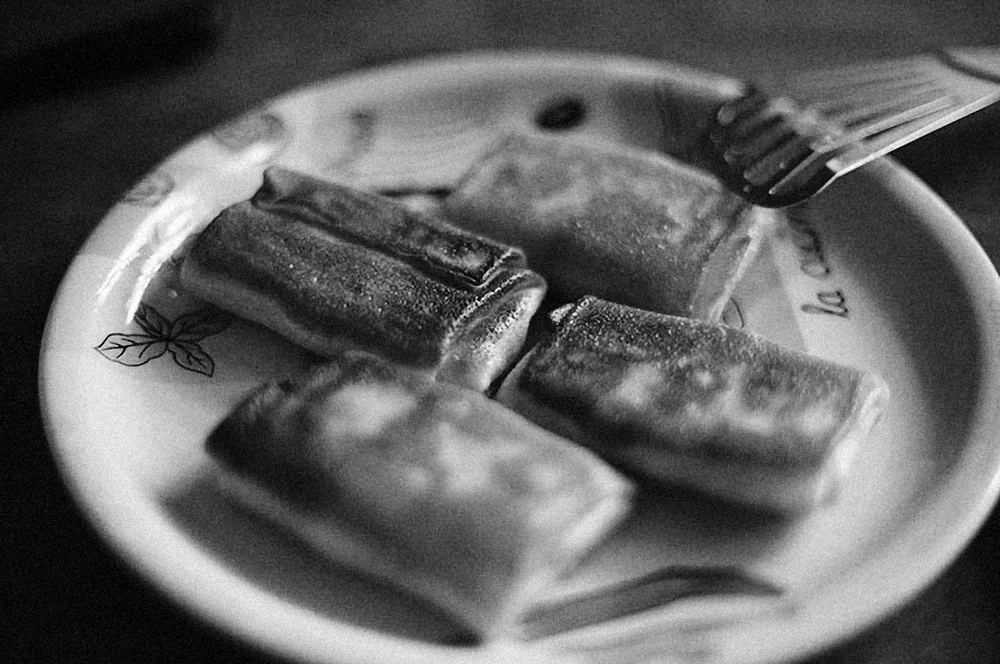
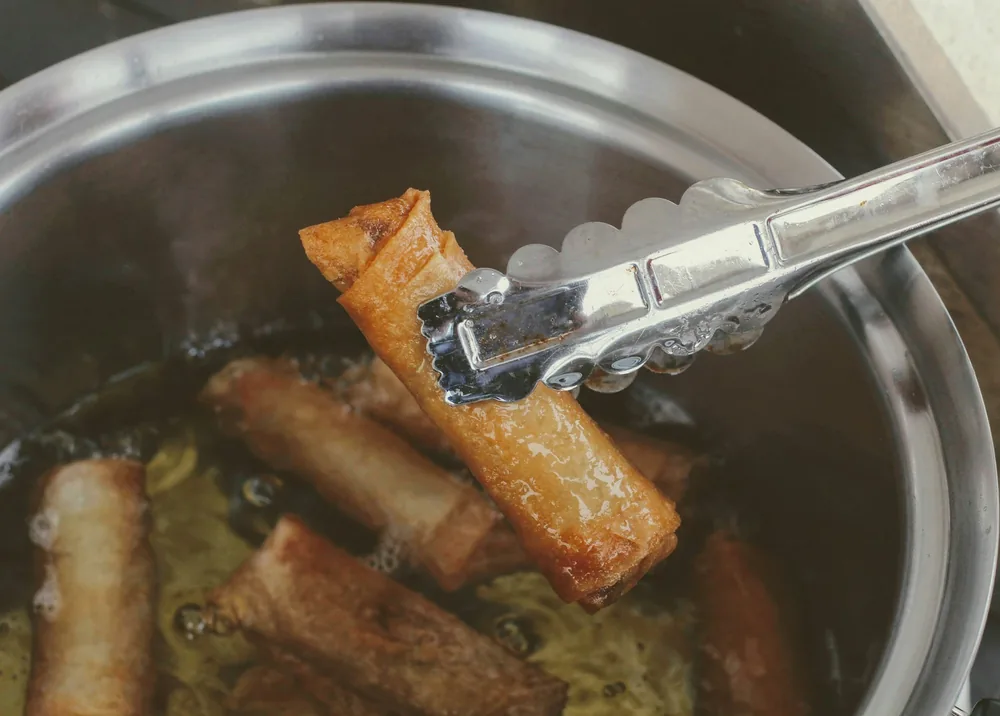
Look at the surface. An egg roll wrapper is covered in small bubbles and blisters from frying, and it is thick enough to stay chewy under the crunch. It is closer to a pastry than to a sheet of dough.
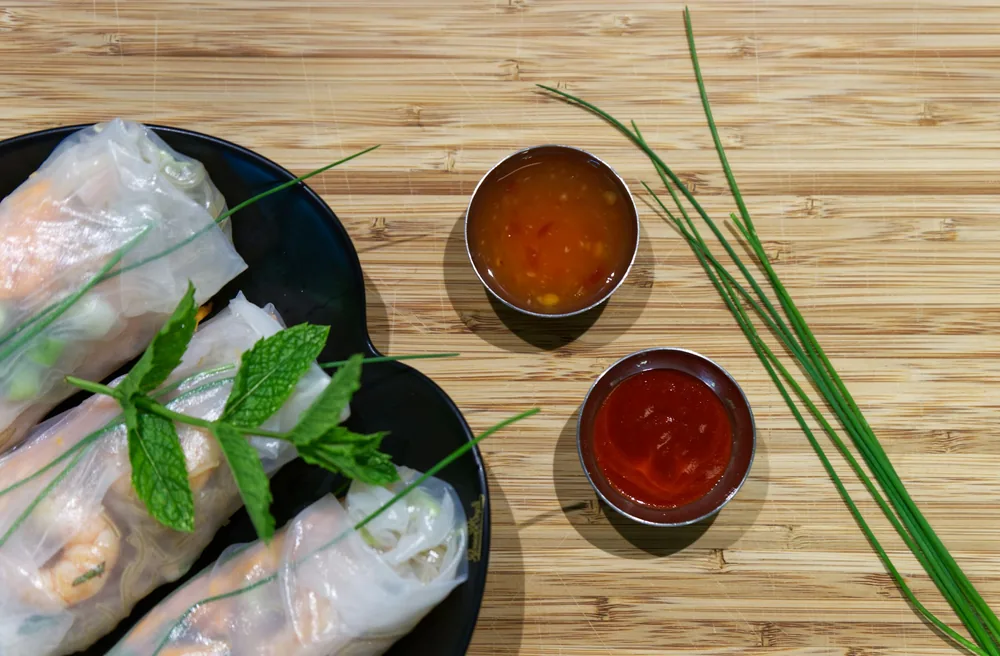
A spring roll wrapper is thin and smooth. Fried, it shatters into flakes rather than crunching. Fresh spring rolls take this further again, using a soft rice paper wrapper that is not cooked at all.
What goes inside
Fillings overlap but tend to differ in density. Egg rolls are usually filled with shredded cabbage and a meat such as pork or shrimp, packed fairly tightly. Spring rolls are often lighter and more vegetable-led, though this varies widely by region and by kitchen.
One thing not to assume: neither name tells you reliably whether there is meat inside. Fillings differ between restaurants, so if it matters, ask.
Side by side
| Egg Roll | Spring Roll | |
|---|---|---|
| Wrapper | Thick, blistered, chewy | Thin and smooth, or soft rice paper |
| Texture fried | Crunchy with chew underneath | Light and brittle, shatters |
| Size | Larger and heavier | Usually slimmer |
| Typical filling | Cabbage with pork or shrimp | Often lighter and more vegetable-led |
| Served | Always fried | Fried or fresh and uncooked |
| Origin | Developed in the United States | Chinese in origin |
Where each one came from
Spring rolls are the older of the two and are Chinese in origin, associated with spring festival foods, which is where the name comes from. Versions of them appear across East and Southeast Asia in quite different forms.
Egg rolls are a Chinese-American creation, generally traced to New York in the first half of the twentieth century. They belong to the same tradition that produced chop suey and egg foo young — Chinese technique adapted by cooks working in the United States. The background on the egg roll covers that history in more detail.
Why the names get muddled
Part of the confusion is genuine overlap and part of it is translation. Both descend from the same family of filled, rolled and fried foods, and English-language menus have never used the two names consistently.
Some restaurants list a thin, light roll as an egg roll. Others use spring roll for anything rolled and fried regardless of wrapper. The result is that the name on the menu is a weaker signal than most people assume, and the only reliable way to know what you are getting is to look at what arrives — or ask.
What about summer rolls?
A third term that turns up occasionally and means something quite specific: a fresh, unfried roll in soft rice paper, usually filled with herbs, vegetables and sometimes shrimp, served cold with a dipping sauce. It is more strongly associated with Vietnamese cooking than Chinese, and it is not fried at all.
If you see it on a menu and expect something crisp, you will be surprised. It is a good dish; it is just a different one.
Which should you order?
- You want something substantial. Egg roll. It eats more like a course than a nibble.
- You want something lighter before a big meal. A spring roll, where the menu has them.
- The food has to travel. Egg rolls hold up better; a thin fried wrapper softens fastest.
- You are feeding a table. Egg rolls cut neatly in half, which makes them easy to share.
How to keep them crisp
Anything fried is at its best within a few minutes of the fryer, and both of these degrade quickly in a closed container. Two practical habits help.
- Eat them first. Of everything in a takeout order, fried starters have the shortest window.
- Open the container on the way home if you can, so trapped steam escapes rather than soaking the wrapper.
- Reheat with dry heat. An oven or air fryer will bring them back; a microwave will not.
The guide to storing and reheating leftovers covers the method for each kind of dish.
What to dip them in
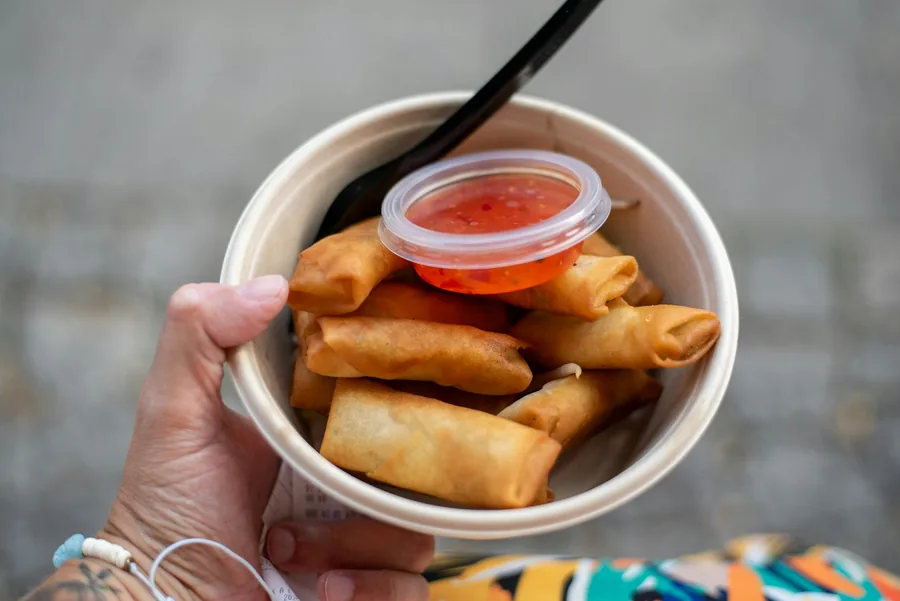
Fried rolls are usually served with a sweet or tangy dipping sauce, which is there to cut the richness of the frying rather than to add heat. If a sauce arrives with them, use it — an egg roll eaten plain is a noticeably heavier thing.
Where they sit on the menu
Egg rolls are in the appetizer section at Panda Li’s Kitchen, in standard, vegetable and shrimp versions. An egg roll is also included with the dinner specials, which are listed as served with pork fried rice and an egg roll or soup.
If you are choosing between the fried starters more broadly, the comparison of wontons and dumplings covers the other half of that section.
Frequently asked questions
What is the difference between an egg roll and a spring roll?
The wrapper. Egg rolls use a thick, bubbly wrapper that fries up crunchy and chewy; spring rolls use a much thinner wrapper that fries lighter and shatters, or is served fresh and uncooked.
Which is bigger, an egg roll or a spring roll?
Egg rolls are usually noticeably larger and heavier, with a thicker wrapper and a denser filling. Spring rolls tend to be slimmer.
Are spring rolls vegetarian?
Often, but not reliably. Fillings vary and cooking is shared, so never assume from the name. If it matters, ask the restaurant about the specific item.
Does Panda Li’s Kitchen serve spring rolls?
The current menu lists egg rolls — a standard egg roll, a vegetable egg roll and a shrimp egg roll — rather than spring rolls. The two names are often used loosely, so it is worth checking rather than assuming either way.
The bottom line
Thick and bubbly means egg roll; thin and smooth means spring roll. Egg rolls are the heavier, crunchier option and the one most American Chinese menus actually carry. Either way, eat them first.
Three egg roll varieties sit in the appetizer section.
View the appetizers