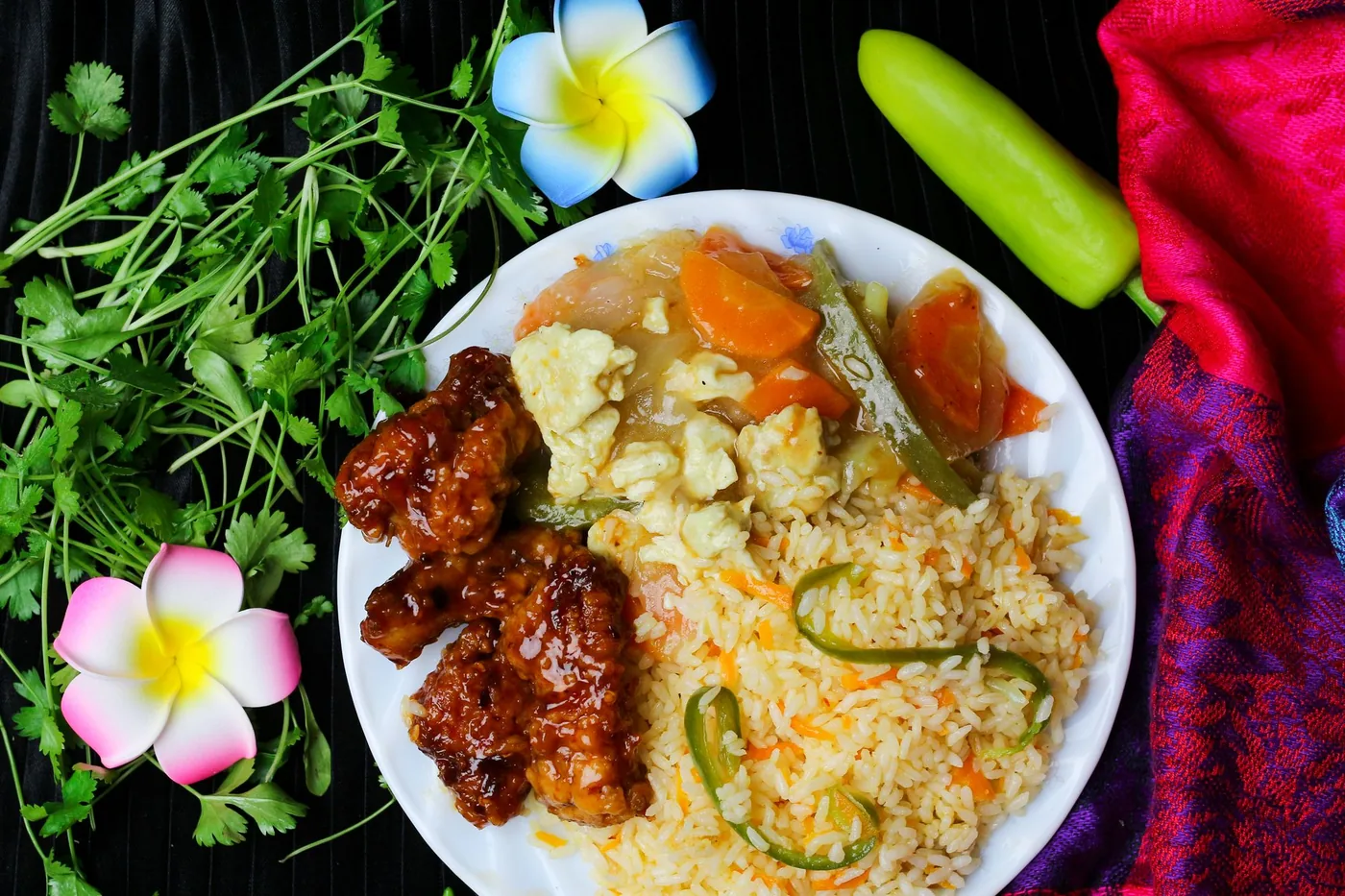
Sweet and sour is probably the first Chinese dish most people in the West ever ate, and it has a slightly unfair reputation as a result — the bright red sauce, the battered pieces, the pineapple. It is worth understanding properly, because how you order it makes a large difference to what turns up.
The short answer
Sweet and sour is a sauce, not a dish: a balance of sugar and acid served with battered, fried pieces of protein. It is the mildest of the well-known Chinese-American sauces, and it is often served separately so the coating stays crisp.
What the sauce actually is
The principle is in the name: something sweet balanced against something acidic. In broad terms that means sugar against vinegar, often with tomato or fruit contributing colour and body. Pineapple and peppers are common additions to the dish rather than the sauce itself.
Beyond that, recipes differ substantially between kitchens and between regions, so it is worth treating any description of what is in it as general rather than as a statement about a particular restaurant.
Why the sauce often arrives separately
This is the detail worth knowing. Battered food loses its crispness within minutes of being sauced, and the drive home makes that worse. So many kitchens send the sauce in a separate container and let you add it at the table.
It also gives you control. Sweet and sour is a sauce people have strong feelings about the quantity of, and having it on the side means a table can share the same dish at different intensities. On the Panda Li’s Kitchen menu, the sweet and sour section carries a note about selecting options when you order, which is where that choice is made.
The versions on the menu
| Dish | What it is | Who it suits |
|---|---|---|
| Sweet and sour chicken | Battered chicken pieces | The default; reliable for children |
| Sweet and sour pork | Battered pork pieces | Closer to the traditional version |
| Sweet and sour shrimp | Battered shrimp | A step up in richness and price |
| Sweet and sour triple delight | More than one protein | A table that cannot agree |
Pork is the version with the longest history — sweet and sour preparations in Chinese cooking were traditionally made with pork or fish rather than chicken. Chicken became the default on American menus because it is the protein most customers reach for.
How to order it well
- Ask for the sauce on the side if it is not already, particularly for collection or delivery.
- Eat it first. Of everything in a takeout order, battered food degrades quickest.
- Do not pair it with another sweet dish. Sweet and sour alongside orange chicken makes for a monotonous table.
- Balance it with something savoury. A black bean dish, a beef and broccoli or a plain vegetable stir fry does the job.
- Order plain rice rather than fried rice with it, so there is something neutral on the plate.
Why it works for cautious eaters
Sweet and sour is the most reliable order on a Chinese menu for anyone nervous about the cuisine. The flavours are familiar, there is no chilli, the texture is crisp rather than unfamiliar, and the sauce is optional if it is served separately.
That makes it a genuinely useful dish rather than a beginner’s compromise. If you are ordering for a family, the guide to ordering for a family with children covers where it fits alongside everything else.
Reheating it
Poorly, if you use a microwave. The coating is the whole point, and steam is its enemy. An oven or an air fryer will bring a sweet and sour dish back to something close to its original texture, provided the sauce was kept separate.
If the sauce was already on it, accept that it will be soft and reheat it gently in a pan instead. The guide to storing and reheating leftovers covers the methods for each kind of dish.
Sweet and sour beyond the obvious
The principle turns up in more places on a Chinese menu than the one section suggests. Anything described as sweet and tangy is working the same balance: orange chicken leans on citrus for the acid, and hot and sour soup uses vinegar for it, with white pepper providing the other half instead of sugar.
Recognising that makes the menu easier to read. If you know you like the sweet-and-acid balance, the orange and lemon dishes are a short step sideways; if it is the crisp batter you like, the house specials section is where the rest of the fried dishes live.
Where it sits on the menu
Sweet and sour has its own section on the Panda Li’s Kitchen menu, listed as served with white rice by default. Sweet and sour pork, chicken and shrimp also appear among the dinner specials, bundled with pork fried rice and an egg roll or soup.
If you like the crisp-fried format but want a different flavour, the house specials section has the sweeter and spicier members of the same family — and the comparison of General Tso’s and orange chicken covers how those differ.
Sweet and sour sits at the furthest point from the savoury end of the menu, and it is only one of several sauces worth knowing. The guide to brown, white, garlic and black bean sauce covers the others and where each one turns up.
If you want sweet without the sharpness, the glazed chicken dishes are the place to look — bourbon chicken in particular is sweet and savoury rather than sweet and sour.
Where the dish comes from
Sweet and sour flavour combinations have a long history in Chinese cooking, particularly in Cantonese cuisine, and the version most people recognise today developed as those dishes travelled and adapted. The background on sweet and sour covers how widely the principle is used beyond the one dish.
Frequently asked questions
What is sweet and sour sauce made of?
Broadly, a balance of something sweet and something acidic — commonly sugar with vinegar — often with tomato or fruit for colour and body. Recipes vary widely between kitchens, so treat any description as general rather than specific to a restaurant.
Is sweet and sour spicy?
No. It is the mildest of the well-known Chinese-American sauces, which is why it is a reliable order for children and for anyone avoiding heat. None of the sweet and sour dishes on this menu is marked spicy.
Why is the sauce sometimes served separately?
So the coating stays crisp. Sauce poured over battered food softens it within minutes, so many kitchens send it on the side and let you add it yourself.
What proteins come in sweet and sour?
Chicken, pork and shrimp are the standard three. The Panda Li’s Kitchen menu also lists a sweet and sour triple delight, which combines more than one.
The bottom line
It is a sauce, it is mild, and it is best when the coating is still crisp. Ask for it on the side, eat it early, and put something savoury next to it on the table.
Four sweet and sour dishes, in small and large sizes, served with white rice.
See the sweet and sour section