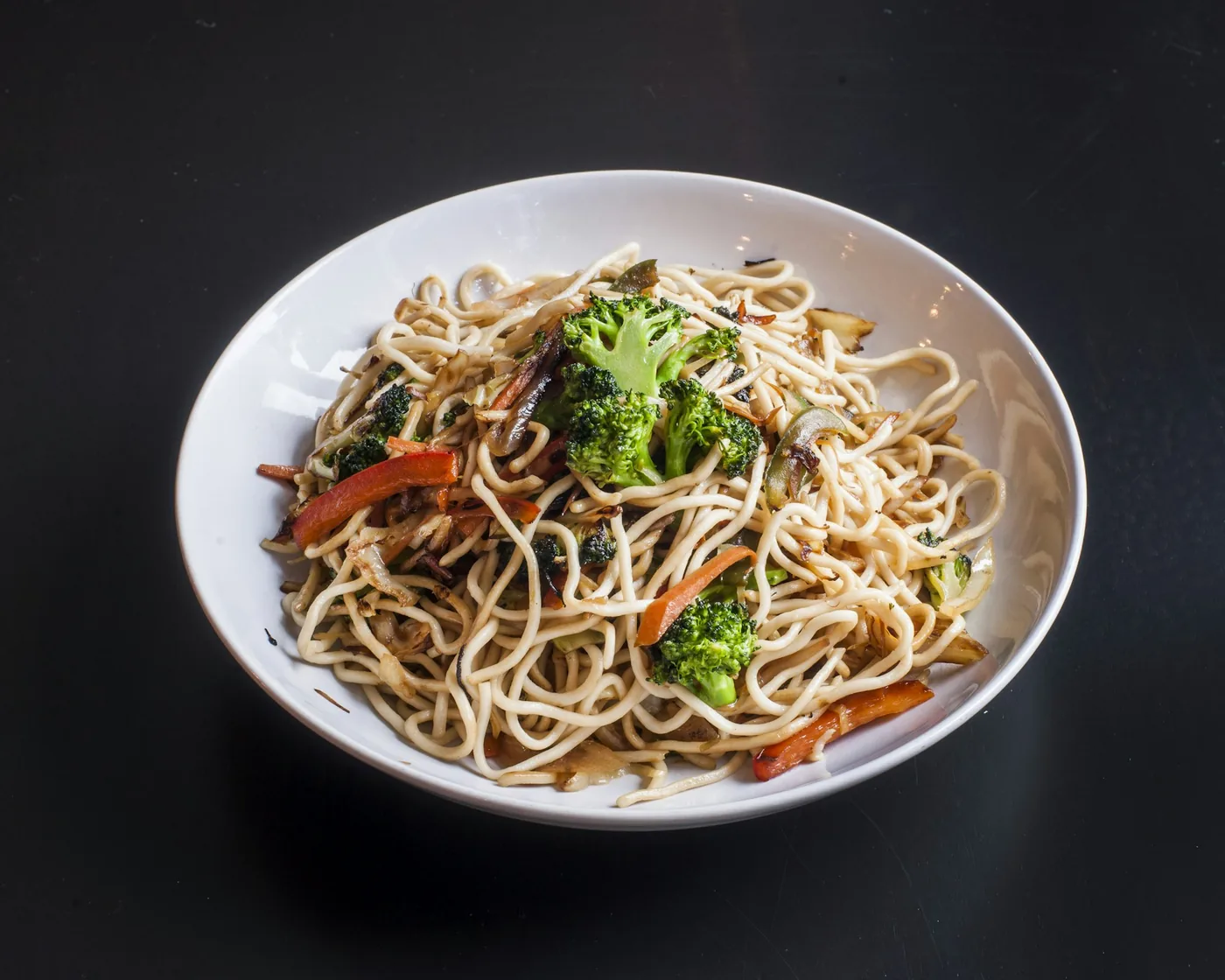
Chow mein and chop suey are the two dishes most often mixed up on an American Chinese menu, partly because they arrive in similar containers and partly because both are stir fries of meat and vegetables. The difference is structural.
The short answer
Chow mein is a noodle dish. Chop suey has no noodles and is served over rice. That single difference drives everything else: chow mein is drier and more browned because the noodles are fried, while chop suey is looser and lighter with a thin sauce spooned over rice.
What chop suey is
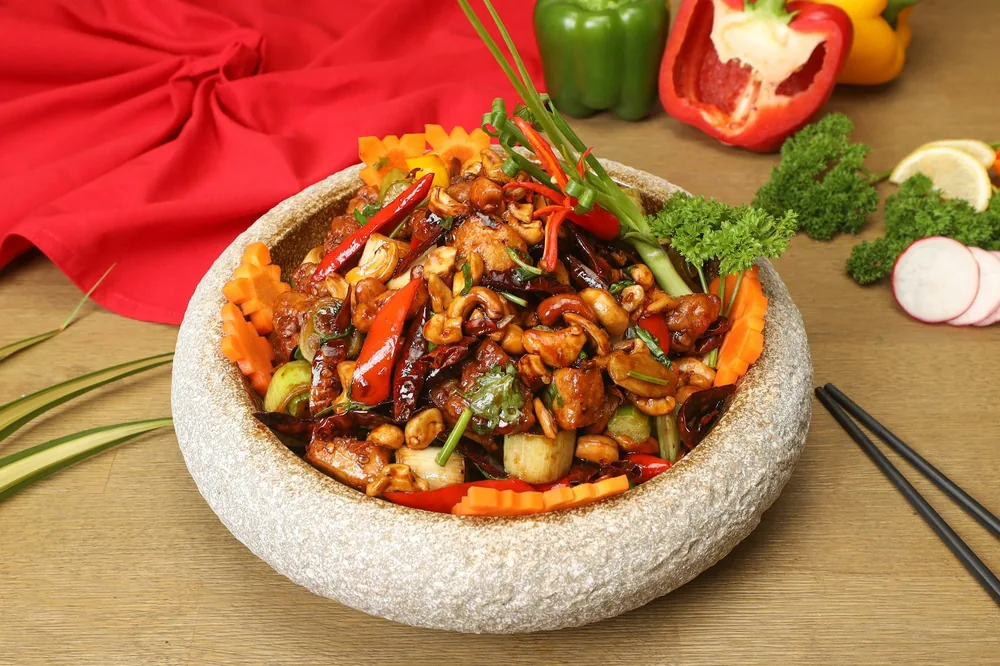
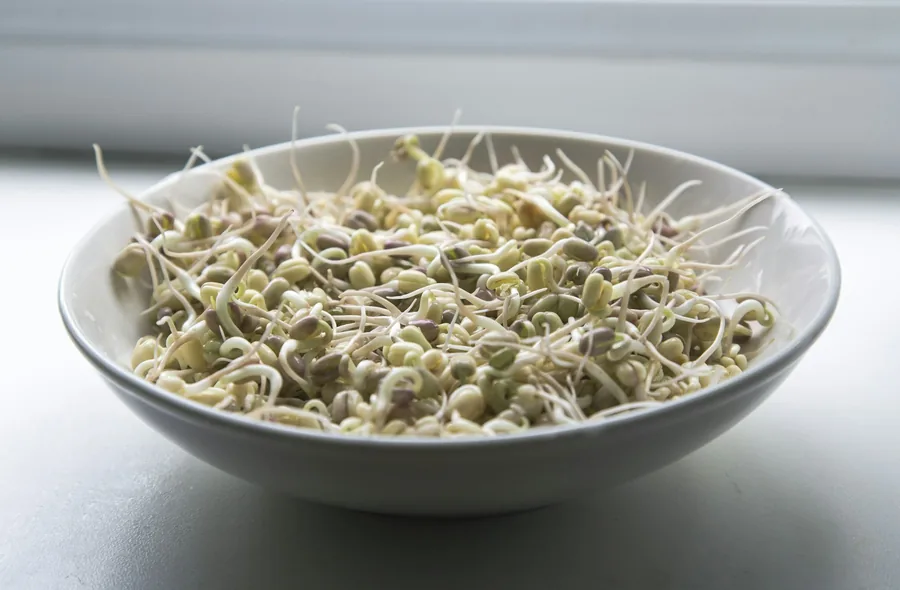
Meat and mixed vegetables — typically celery, onion, bean sprouts and cabbage — stir fried and finished with a light, slightly thickened sauce, then served with rice. The vegetables are the bulk of the dish, and the sauce is deliberately restrained.
It is one of the oldest Chinese-American dishes and one of the most historically significant. It was created by Chinese cooks in the United States in the nineteenth century, and for decades it was the dish most Americans associated with Chinese food.
What chow mein is
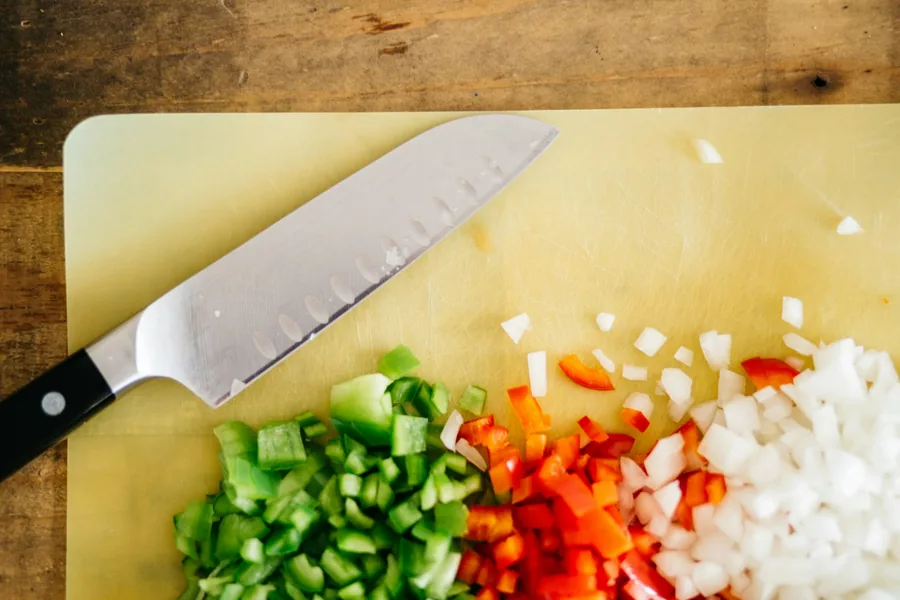
Wheat noodles fried in the wok along with meat and vegetables. The high heat browns the noodles and drives off moisture, which gives the dish more colour and a firmer texture than a boiled noodle would have. Depending on the kitchen, the noodles range from soft with crisp edges to genuinely crunchy.
On many American menus, including this one, chow mein is served with white rice on the side — which catches out people expecting a noodle dish to arrive by itself.
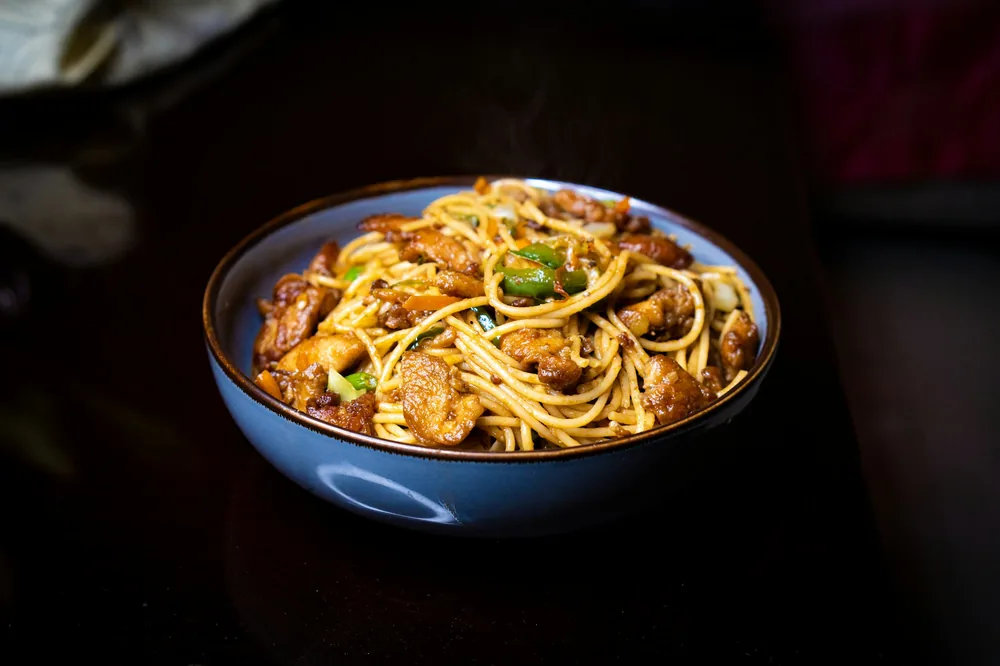
Side by side
| Chow Mein | Chop Suey | |
|---|---|---|
| Base | Wheat noodles | Meat and vegetables, no noodles |
| Served with | White rice on this menu | White rice |
| Sauce | Light, clings to the noodles | Thin and slightly thickened, spooned over |
| Texture | Drier, browned, sometimes crisp | Softer and looser |
| Vegetable content | Moderate | High — vegetables are the bulk |
| Origin | Chinese, adapted in the US | Created in the US by Chinese cooks |
| Order it when | You want noodles and texture | You want something lighter and vegetable-heavy |
Which one suits your meal?
- You want noodles. Chow mein. Chop suey will not scratch that itch.
- You want more vegetables without ordering a separate vegetable dish. Chop suey.
- You are ordering several rich, sauced dishes. Chop suey is the lighter counterweight.
- You want the most texture on the plate. Chow mein, particularly if the kitchen fries the noodles hard.
Finding them on the menu
At Panda Li’s Kitchen, both have their own sections. The chow mein section covers chicken, roast pork, beef, shrimp and house special, and the chop suey section lists the same range of proteins. Both sections are listed as served with white rice.
If it is really noodles you are after, the lo mein section is where the softer, saucier noodles live, and the comparison of lo mein and chow mein covers that choice in detail.
Both sections on this menu are listed as served with white rice, which is worth knowing because the lo mein section next to them is not. What comes with each part of the menu sets out which sections include a starch and which leave you to add one.
A note on chop suey’s history
Chop suey has an outsized place in American food history. Its name comes from a Cantonese term for mixed or assorted pieces, and by the early twentieth century chop suey restaurants had spread across American cities. It later fell out of fashion as menus diversified, which is why it is now one of the least ordered items in a section that once defined the entire cuisine. The Britannica entry on chop suey covers that history.

How to tell which one you have been given
If a takeout order arrives unlabelled, three checks settle it in seconds.
- Look for noodles. Present means chow mein. Absent means chop suey. This alone is usually enough.
- Look at the sauce. Chop suey has a thin sauce that pools at the bottom of the container. Chow mein’s seasoning clings to the noodles instead.
- Look at the vegetables. Chop suey is vegetable-heavy by design, with celery, onion and bean sprouts prominent. Chow mein has fewer, cut smaller.
The third dish in this family
Lo mein completes the set, and it is the one that resolves most of the confusion. All three use the same proteins and the same basic vegetables; the difference is entirely in the starch and the technique.
| Lo Mein | Chow Mein | Chop Suey | |
|---|---|---|---|
| Noodles | Yes, boiled then tossed | Yes, fried in the wok | None |
| Rice | No | Served with rice on this menu | Served over rice |
| Sauce | Heavy, coats the noodles | Light, clings | Thin, spooned over |
| Texture | Soft and slippery | Drier, browned | Soft and loose |
| Vegetables | Moderate | Moderate | The bulk of the dish |
Why chop suey fell out of fashion
For the first half of the twentieth century chop suey was, for many Americans, what Chinese food meant. Chop suey houses opened in cities across the country and the dish appeared everywhere from diners to department store cafeterias.
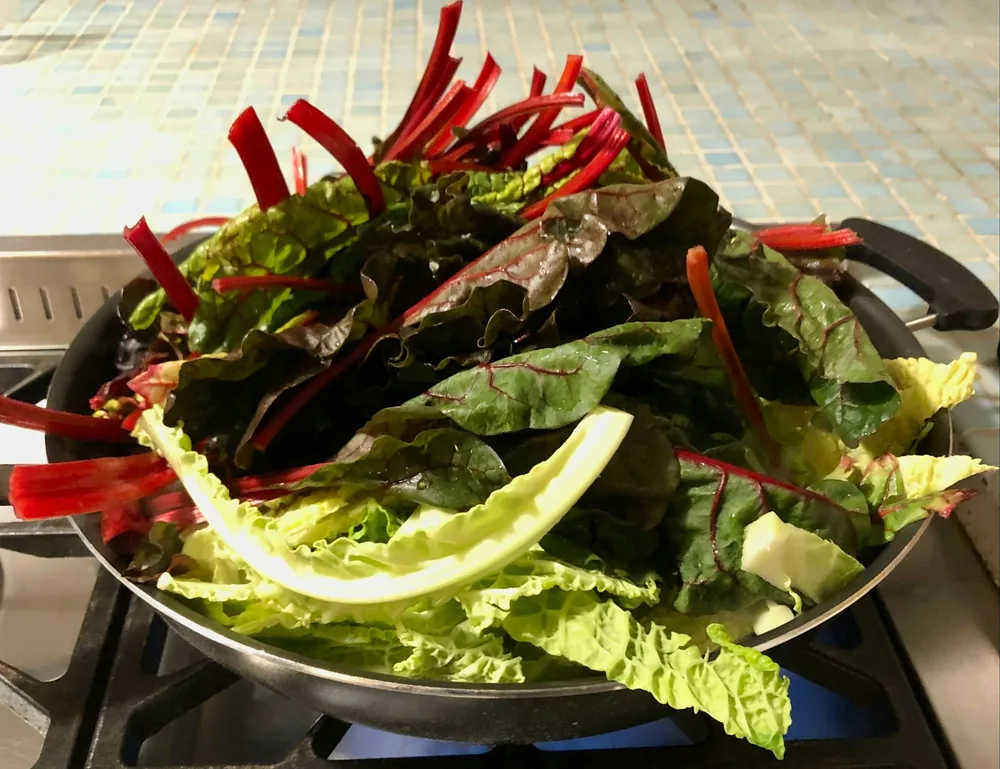
What changed was the range of the menus around it. As American Chinese restaurants broadened into regional styles and more distinctive dishes, chop suey came to look plain by comparison, and it gradually became one of the least ordered items on menus that still carry it. That is a shame if you like vegetables: it remains the most vegetable-forward stir fry on most menus.
Frequently asked questions
What is the main difference between chow mein and chop suey?
Noodles. Chow mein is a noodle dish — the noodles are fried in the wok and are the base of the plate. Chop suey has no noodles at all: it is meat and vegetables in a light sauce, served over rice.
Which is healthier, chow mein or chop suey?
That depends on preparation and portion rather than the dish name. Chop suey is generally more vegetable-heavy, which some people prefer, but the sauce, the oil and the size of the order matter more than the category.
Is chop suey a real Chinese dish?
It is a genuine Chinese-American dish. It was created by Chinese cooks working in the United States in the nineteenth century, using Chinese stir fry technique with locally available vegetables. It is part of Chinese-American cooking rather than a dish you would find on a menu in China.
Does chow mein come with rice?
On many American Chinese menus, yes. The chow mein section at Panda Li’s Kitchen is listed as served with white rice, which surprises people who expect a noodle dish to arrive on its own.
The bottom line
If there are noodles, it is chow mein. If it arrives over rice with no noodles in sight, it is chop suey. Chow mein is the better order for texture; chop suey is the better order for vegetables.
Both sections list the same range of proteins, in small and large sizes.
Compare the two sections