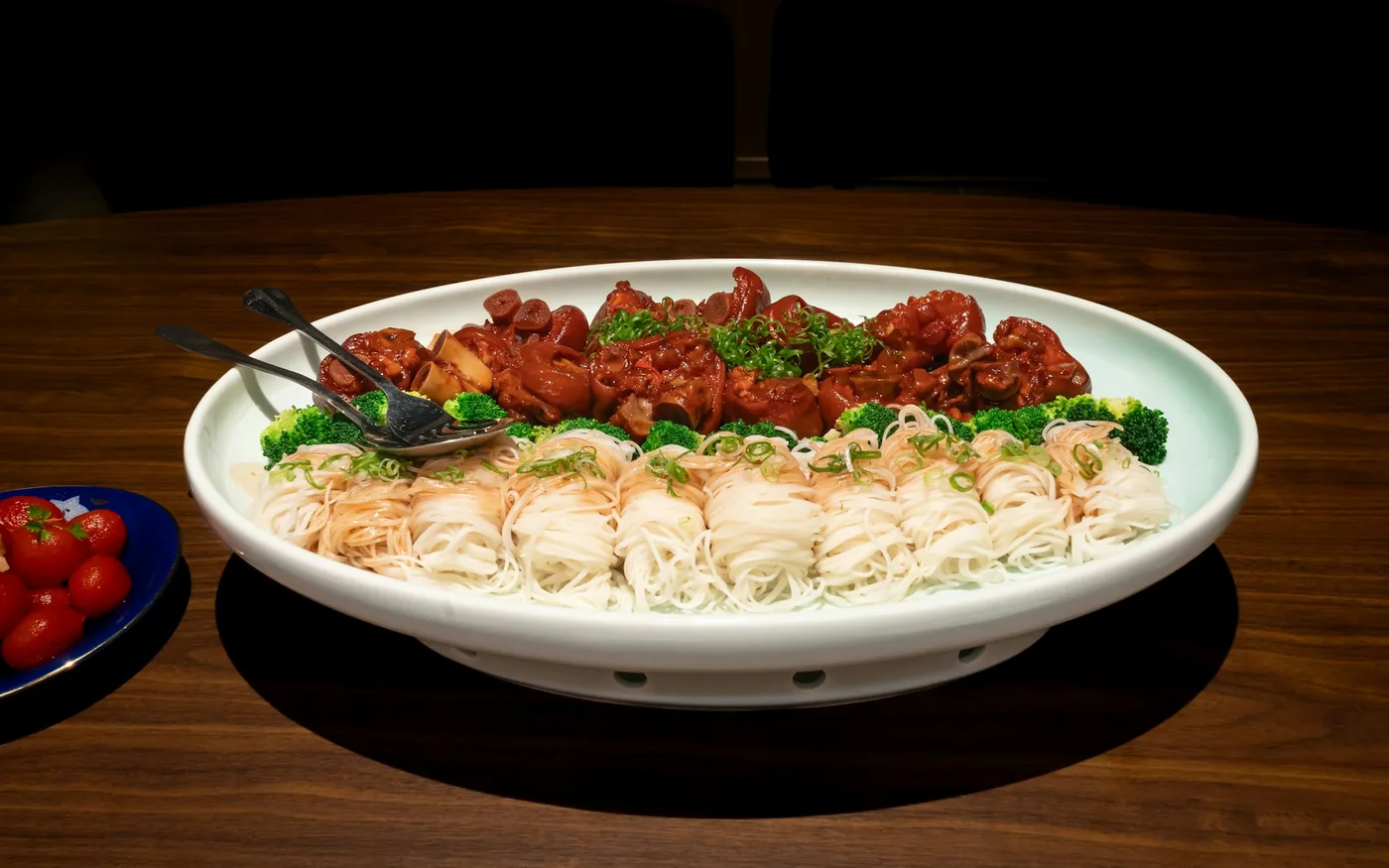
“House special” is one of those phrases that appears all over a Chinese takeout menu without ever being explained. It turns up in the fried rice section, the noodles, the soups and the egg foo young, and it usually costs a little more than the dish next to it.
The short answer
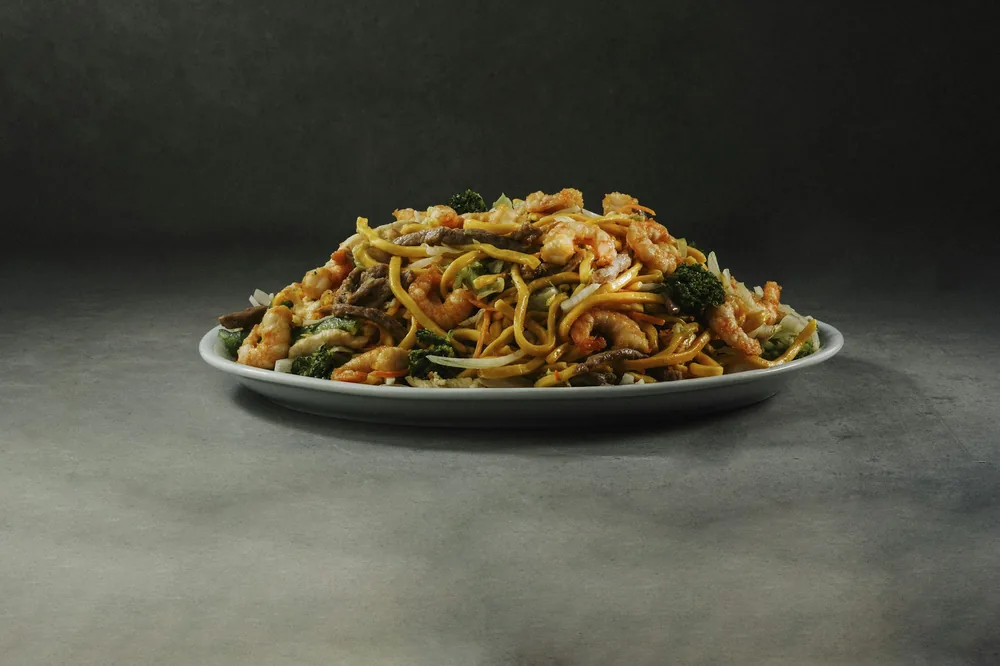
House special means the dish is made with more than one protein instead of just one. Where the menu offers chicken lo mein, roast pork lo mein and beef lo mein separately, house special lo mein combines several of them in the same dish. Some menus call the same thing “combination”.
Where it appears on the menu
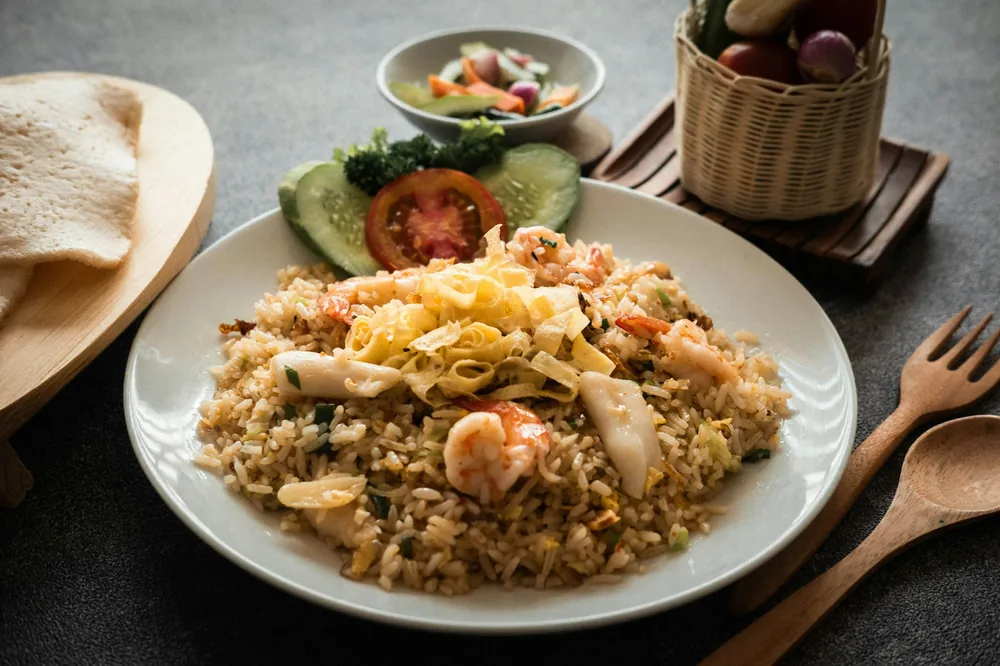
This is the part that surprises people. House special is not a single dish — it is a variation that repeats across the menu. At Panda Li’s Kitchen it appears in seven different sections:
- Fried rice — house special fried rice
- Lo mein — house special lo mein
- Chow mein — house special chow mein
- Chop suey — house special chop suey
- Mei fun — house special mei fun
- Egg foo young — house special egg foo young
- Soups — house special soup
In every case the pattern is the same. Look at the other items in that section, note which proteins they use individually, and the house special version is broadly those proteins together.
The other meaning of house special
Confusingly, the same words are also used for a whole section of the menu. A “House Specials” section is something different: the restaurant’s signature dishes, often larger or more elaborate than the standard entrées, and usually not organised by protein at all.
On this menu that section contains dishes like General Tso’s Chicken, Happy Family, Seafood Delight, Orange Beef and Walnuts Shrimp. So the rule is: read the section heading as well as the dish name. House special fried rice means multi-protein fried rice. The House Specials section means the kitchen’s signature list.
Comparing the two meanings
| House special as a dish variation | The House Specials section | |
|---|---|---|
| What it means | Multi-protein version of a standard dish | The restaurant’s signature dishes |
| Where you see it | Fried rice, noodles, chop suey, soup, egg foo young | Its own section of the menu |
| Typical contents | Chicken, roast pork, beef and shrimp together | Larger or more elaborate plates |
| Price | Slightly above the single-protein version | Usually the higher end of the menu |
| Good for | One person wanting variety in one container | A centrepiece dish for a table |
When house special is the right order
The multi-protein version solves a specific problem: you want variety but you only want to order one thing. That comes up more often than people admit.
- Ordering one container as a whole meal. House special fried rice or lo mein gives you range without ordering three dishes.
- Ordering for someone whose taste you do not know. Covering several proteins hedges the bet.
- Feeding a table cheaply. One large house special fried rice in the middle of the table does more work than the single-protein version.
- You cannot decide. Which is, honestly, the most common reason.
When to order something else
There are good reasons to skip it. If you actually prefer one protein, the single-protein version is the better dish — a chicken lo mein tastes more of chicken than a house special lo mein does. And if anyone at the table avoids shellfish, house special versions are usually the wrong choice, because shrimp is almost always one of the proteins included.
That last point is worth taking seriously rather than guessing. The exact combination varies between restaurants, so if it matters, ask what is in the house special version rather than assuming.
Reading the rest of the menu the same way
Once house special clicks, several other menu conventions become easier to read. Sections are organised either by cooking method or by protein, and the same modifiers repeat throughout: small and large for portion, the protein name for the variation, and words like Szechuan or Hunan for the style.
Put together, that means a menu of nearly three hundred items is really a much smaller set of dishes crossed with a set of variations. The beginner’s guide to reading a Chinese menu works through the rest of that structure.
Where to find it on this menu
The multi-protein versions sit in their own sections: fried rice, lo mein, chow mein, chop suey, mei fun, egg foo young and the soup list.
The separate signature list is in the house specials section, which is where the larger plates live.
One dish in that section is not Chinese in origin at all. Bourbon chicken is named after a street in New Orleans, and how it ended up here says a good deal about how these menus were assembled.
A note on where the convention comes from
Multi-protein dishes are a hallmark of American Chinese cooking rather than a direct import. They grew out of the same practical logic that shaped much of the cuisine in the United States: use what the kitchen already has prepared, offer generous portions, and give customers an easy way to try several things at once. The background on American Chinese cuisine covers how those conventions developed.
Frequently asked questions
What does house special mean on a Chinese menu?
It means the dish is made with more than one protein rather than a single one. A house special fried rice or lo mein typically combines chicken, roast pork, beef and shrimp in the same dish.
Is house special more expensive?
Usually a little, because it contains several proteins including shrimp, which is the most expensive of them. Check the current menu for the price on any particular dish.
Is house special the same as combination?
On most American Chinese menus, yes. Both signal a multi-protein version of a dish. Some restaurants also use house special for a separate section of signature dishes, so read the section heading as well as the dish name.
Which house special dish should I try first?
House special fried rice is the easiest introduction, because you can see exactly what is in it. House special lo mein is the better choice if you want a self-contained meal in one container.
The bottom line
House special on a dish means several proteins instead of one. House Specials as a section means the kitchen’s signature plates. Order the first when you want variety in a single container, and check what is in it if shellfish is a concern.
House special versions appear across seven sections of the menu.
Browse the full menu