The card terminal turns round, three percentages appear, and there is a small grey button underneath that says no thank you. Whatever you pick, you will wonder afterwards whether it was right. Almost nobody has been told what the convention actually is.
The short answer
Delivery and collection are treated differently. Guidance published by University of Florida IFAS Extension puts food delivery at 15 to 20 per cent, and treats in-store pickup as a transaction where a tip is not expected, because no service is being provided beyond handing the order over.
Why the two are different
It comes down to what is being done for you. A delivery involves a person driving to your address, usually in their own vehicle, at their own fuel and wear cost, in whatever weather the evening produced. That is a service, and it is priced like one.
Collecting your own order involves someone putting a bag on a counter. That is not nothing, but it is not the same, and the convention reflects it.
What the ranges look like
| Situation | Common range | Notes |
|---|---|---|
| Delivery | 15–20% | Higher for distance, bad weather or a large order |
| Collected takeout | Optional | Rounding up is common; not expected |
| Large or complex collected order | A few dollars, or around 10% | Someone did real work packing it |
| Dine-in table service | 15–20% | The familiar case, for comparison |
The point of a range is that it is a range. The bottom of it is not an insult and the top of it is not obligatory.
When to go higher
- Bad weather. The single most commonly cited reason, and the most reasonable.
- A long distance, or an address that is genuinely hard to find.
- A large order that took real effort to carry.
- Stairs, gates, or a delivery to an office where the driver has to navigate a building.
- Late at night, close to closing.
Cash or card
Both usually reach the driver. Cash reaches them immediately and in full, which is why many drivers prefer it, and why it is a reasonable default if you are unsure how a particular business handles card tips.
If you order through a platform rather than direct, the question is worth a second thought: how a platform passes on a tip has been a recurring point of contention, and it is one of several reasons to consider ordering direct rather than through an app.
The counter prompt
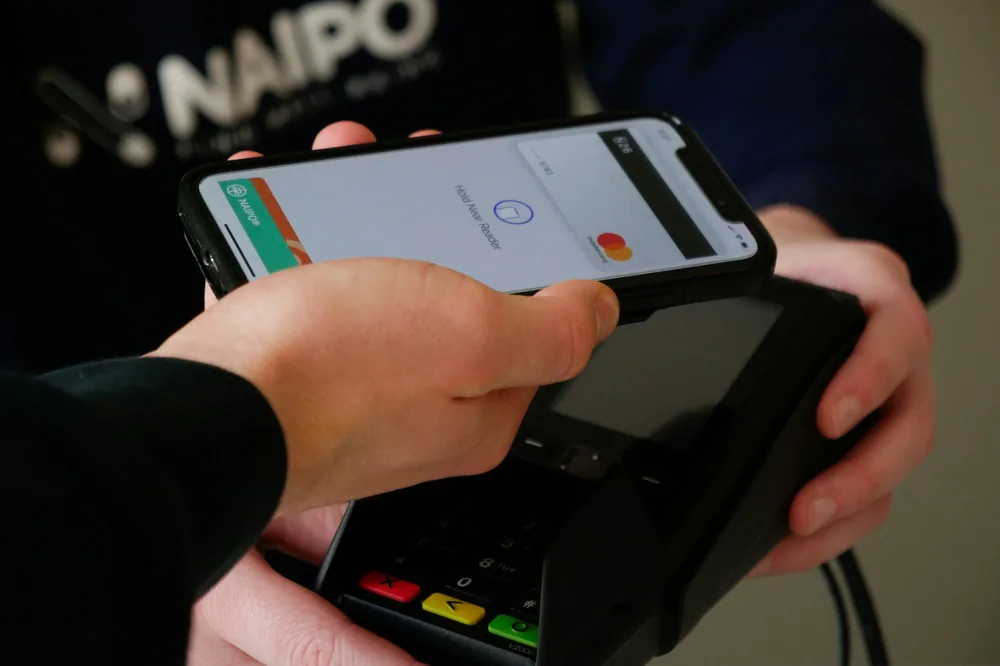
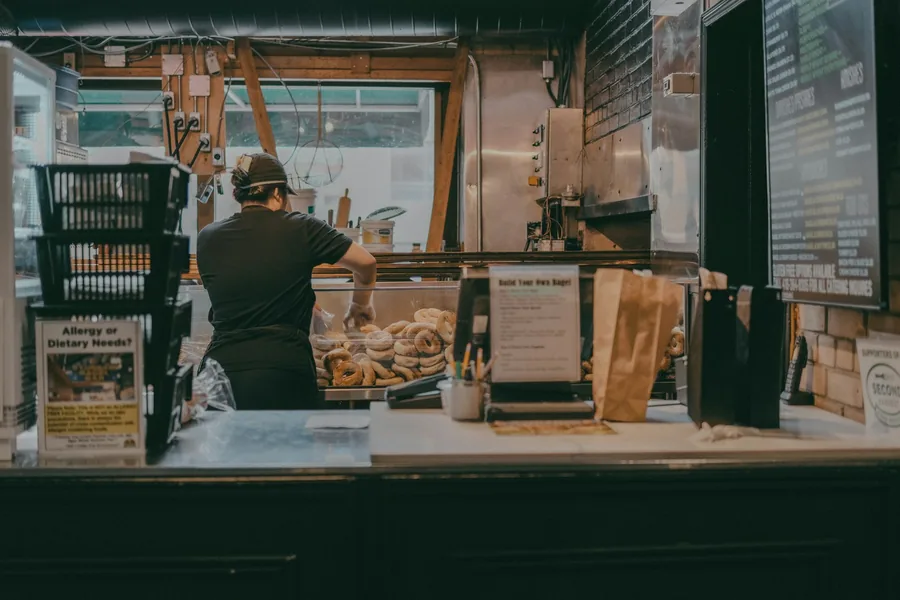
Tipping prompts on card terminals at collection counters are recent, common, and the main reason people now feel uncertain about something that used to be simple. It is worth being clear: the prompt is a default setting on a payment terminal, not a statement of what is owed.
Declining it is a normal thing to do, and so is rounding up. Neither choice needs justifying.
A worked example
Numbers make this easier than percentages do. Take a delivery order of thirty dollars of food, close by, on an ordinary evening.
| Tip | What it comes to | How it reads |
|---|---|---|
| 15% | $4.50 | The standard, and perfectly normal |
| 18% | $5.40 | A little above; the common middle button |
| 20% | $6.00 | Generous, and easy arithmetic |
| Rounding up | Varies | Fine, as long as it lands in the range |
The gap between the top and bottom of that table is a dollar fifty. It is worth far less agonising than most people give it, and the difference matters much more to the person receiving it as a habit than as a one-off.
What about the kitchen?
A reasonable question, since the cooking is the part you actually came for. In most takeaway operations a tip left at the counter goes into a shared pot rather than to one person, and how it is divided varies from business to business.
If you want to do something for the kitchen specifically, the honest answer is that ordering again, and saying so, does more than a few dollars at the counter. A short positive review does more still, and costs nothing.
Three things not to do
- Do not tip on the fees. A service fee is revenue for a business, not pay for a person.
- Do not remove a tip because the food was slow if the delay was the kitchen’s rather than the driver’s. They are usually different people.
- Do not treat the middle button as the neutral option. Terminals are configured by the business, and the defaults have drifted upwards.
A note on how this restaurant works
Panda Li’s Kitchen takes orders by phone and runs its own delivery within its own area, so a tip for a delivery goes to the person who actually drove it rather than through a platform. For collection, the guidance above applies as it does anywhere: optional.
If you are deciding between the two routes in the first place, the comparison of delivery and pickup covers what each does to the food, and how much to order covers sizing the order itself.
Two things worth remembering
- Tip on the food, not on the fees. A delivery fee is a charge from the business, not payment to the driver.
- Consistency beats generosity. A reliable, ordinary tip every time is worth more to someone than an occasional large one.
Frequently asked questions
Are you supposed to tip for takeout you collect yourself?
It is optional rather than expected. Etiquette guidance generally treats counter pickup as a non-service transaction, though many people round up or leave a small amount, particularly for a large or complicated order.
How much should you tip a delivery driver?
Guidance from University of Florida IFAS Extension puts food delivery at 15 to 20 per cent. Distance, weather and order size are the usual reasons to go higher.
Should you tip in cash or on the card?
Either reaches the driver in most cases, but cash reaches them immediately and in full. If you are unsure how a card tip is distributed, cash removes the doubt.
Do you tip before or after the delivery fee?
Tip on the food total. The delivery fee is a charge from the restaurant or the platform, not payment to the person who brought your order.
The bottom line
Fifteen to twenty per cent for delivery, more when the conditions are bad. For collection, tipping is optional and the prompt on the terminal is not an instruction. Tip on the food total rather than on the fees, and do not agonise over the difference between two numbers on a screen.
Delivery here is run by the restaurant, within its own area.
See how ordering works