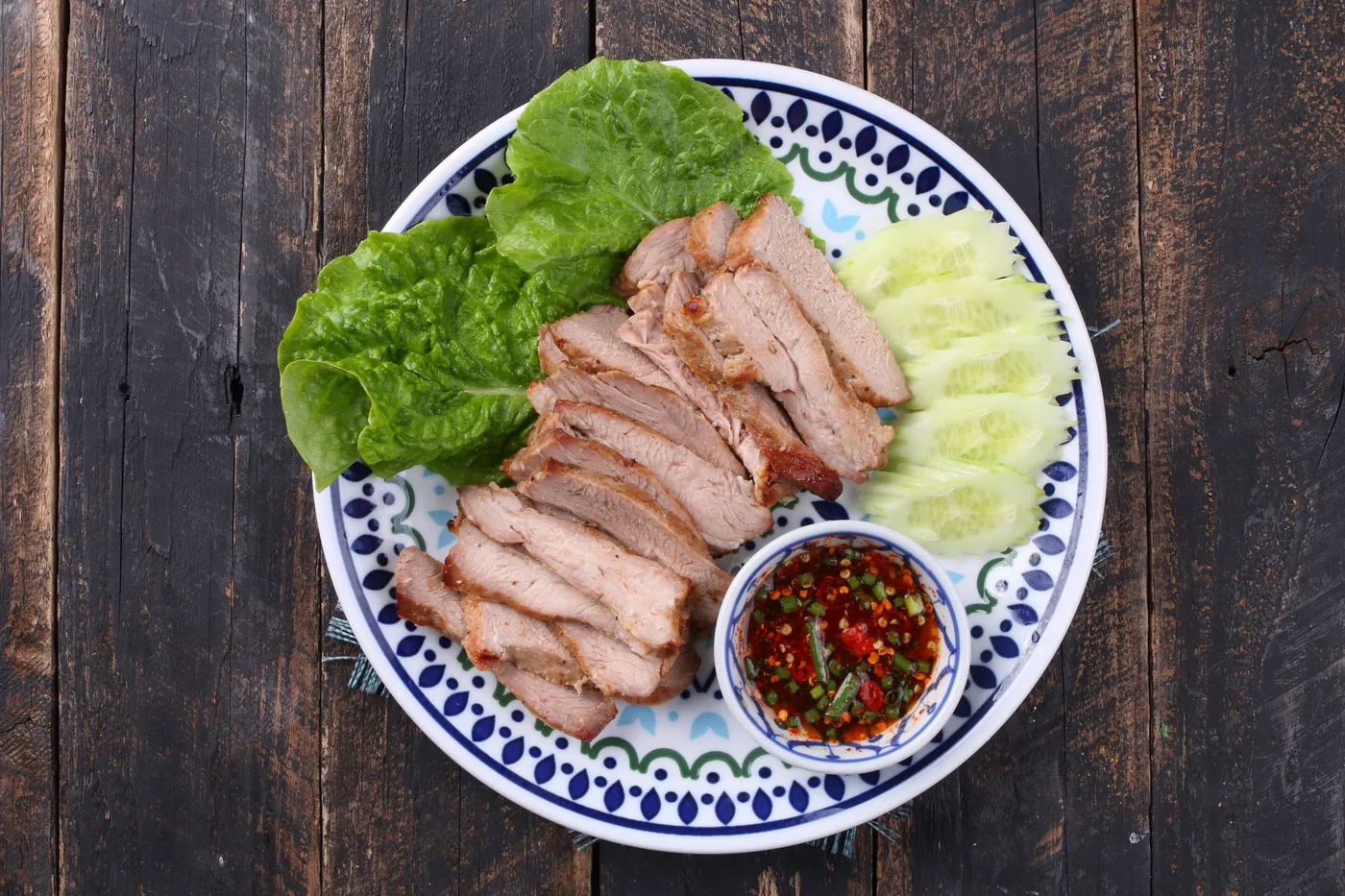
Pork is the section most people scroll straight past on a Chinese menu, usually on the way to chicken or beef. That is a genuine miss: the dishes are as approachable as the chicken ones, the flavour is deeper, and the section is often the best value on the menu.
The short answer
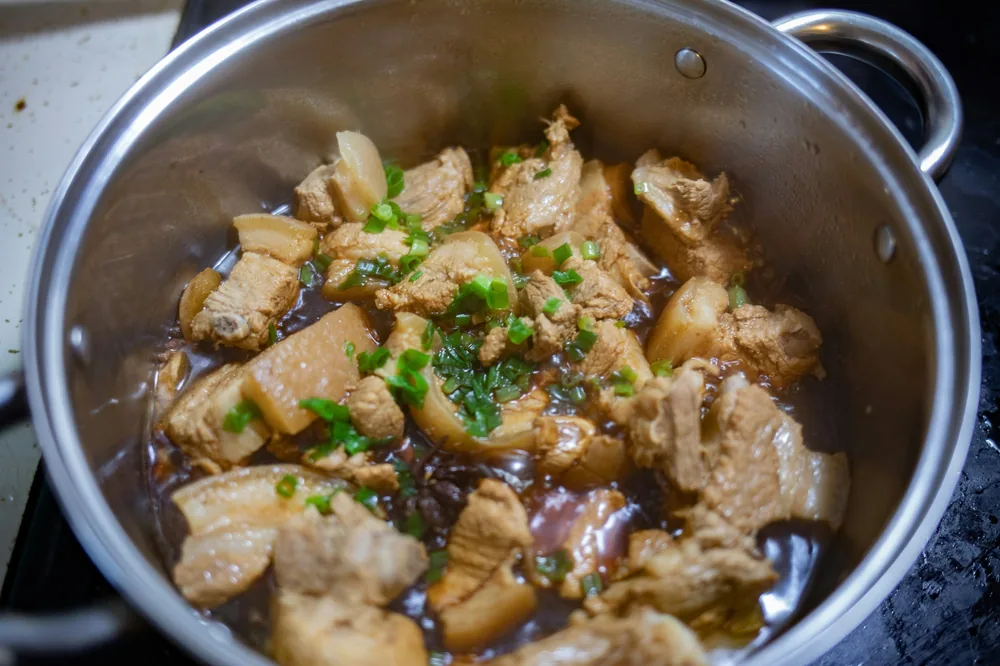
Most Chinese-American pork dishes are built on roast pork — pork that has been marinated and roasted before it goes anywhere near the wok. That pre-cooking is what gives the section its savoury depth, and it is why pork tastes more of something than plain chicken does.
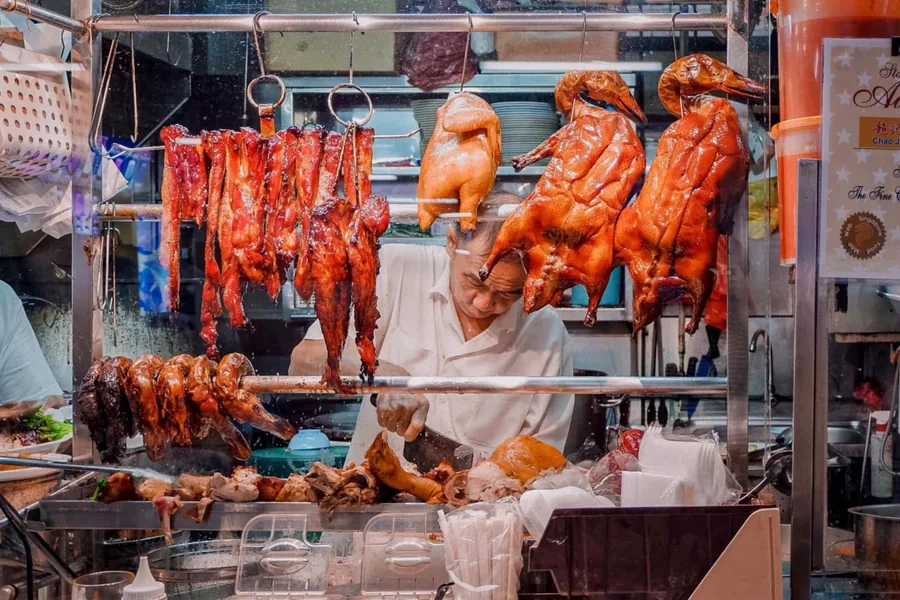
What roast pork actually is
The pork is marinated in a sweet and savoury mixture, then roasted until the edges caramelise. It comes out with a reddish rim, a slightly sticky surface and a flavour that is already complete before it goes into a dish.
That matters because it changes the role of the sauce. In a chicken stir fry the sauce does most of the work; in a roast pork dish it is supporting something that already tastes strongly of itself. It is the same pork that turns up in pork fried rice, pork lo mein and pork egg foo young.
The mild dishes
Roast pork with broccoli
The direct equivalent of chicken or beef with broccoli, and the easiest entry point to the section. Savoury, straightforward, not marked spicy.
Roast pork with Chinese vegetables
A mixed-vegetable stir fry with the same roast pork. Lighter than the broccoli version and the most vegetable-heavy option in the section.
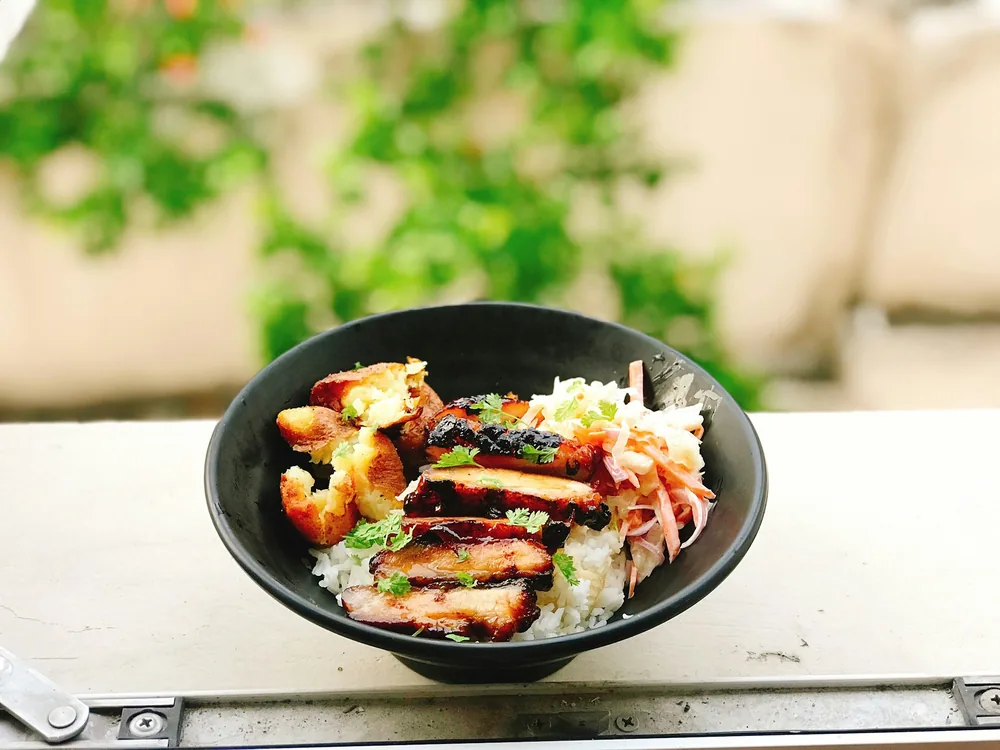
Moo shu pork
The one dish in the section that arrives differently from everything else. Moo shu is a stir fry of shredded pork with vegetables and egg, and in the traditional presentation it is eaten wrapped in thin pancakes rather than spooned over rice.
Whether pancakes come with it varies between restaurants, so it is worth asking when you order if that is the version you are expecting. It is not marked spicy on this menu, which makes it one of the more interesting mild options.
The spicy dishes
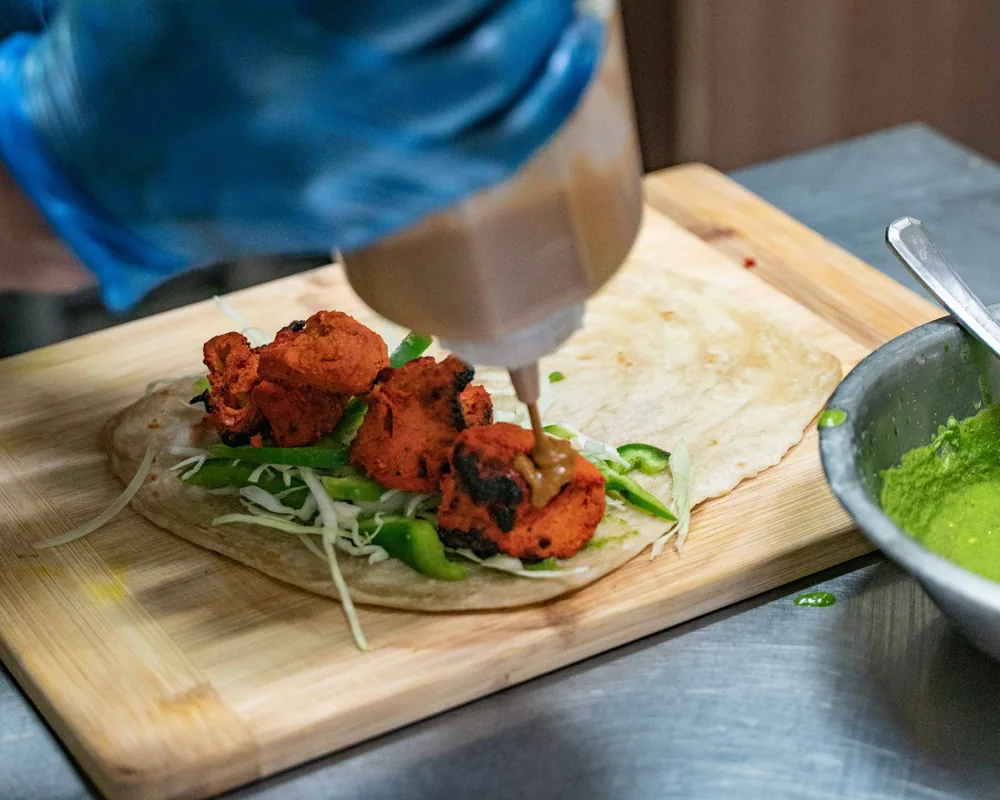
Pork skews hotter than chicken. Five of the eight dishes in this section are marked spicy, which is a higher proportion than any section except beef.
- Roast pork Hunan style — direct, dry chilli heat.
- Shredded pork with garlic sauce — savoury and garlicky, with chilli.
- Mongolian pork — the pork counterpart to Mongolian beef, sweet and rich.
- Pork Szechuan style — chilli with the layered character of Sichuan cooking.
- Double cook pork — simmered then stir fried, firmer in texture and chilli-led.
The section at a glance
| Dish | What defines it | Heat on this menu |
|---|---|---|
| Roast pork with broccoli | Light brown sauce, broccoli | Not marked |
| Roast pork with Chinese vegetables | Mixed vegetables, lighter | Not marked |
| Moo shu pork | Shredded stir fry, traditionally wrapped | Not marked |
| Roast pork Hunan style | Direct chilli heat | Marked spicy |
| Shredded pork with garlic sauce | Garlic sauce with chilli | Marked spicy |
| Mongolian pork | Sweet, rich, scallion-forward | Marked spicy |
| Pork Szechuan style | Chilli, Szechuan style | Marked spicy |
| Double cook pork | Simmered then fried, firmer texture | Marked spicy |
How pork compares to the other proteins
| Pork | Chicken | Beef | |
|---|---|---|---|
| Flavour | Savoury and deep, pre-roasted | Mild, takes on the sauce | Rich and assertive |
| Typical price | Lower | Lower | Higher |
| Dishes on this menu | Eight | Thirteen | Ten |
| Marked spicy | Five of eight | Five of thirteen | Five of ten |
| Mild options | Two | Seven | Four |
The table shows the section’s one real limitation: if you want something mild, pork gives you fewer routes than chicken does. Two of the eight dishes are unmarked, against seven of thirteen in the chicken section. For a table that cannot take heat, chicken is the safer section to build around.
Pork elsewhere on the menu
Roast pork is one of the most widely used ingredients on a Chinese menu, and it turns up well beyond its own section.
- Fried rice — roast pork fried rice, and the pork fried rice bundled into the lunch and dinner specials
- Lo mein, chow mein, mei fun and chop suey — roast pork versions of each
- Egg foo young — roast pork egg foo young
- Sweet and sour — sweet and sour pork
- Appetizers — barbecued and boneless spare ribs
Why the section is worth using
- Value. Pork is usually priced closer to chicken than to beef, and the portions are the same size.
- Depth of flavour. Roast pork brings more to the dish than plain chicken does.
- Variety on a table. If you are ordering several dishes, pork stops the meal turning into three variations on chicken.
- It appears everywhere else too. Pork fried rice, pork lo mein, pork chow mein and pork egg foo young all use the same roast pork.
Where to find it
The pork section at Panda Li’s Kitchen lists eight dishes in small and large sizes, all served with white rice by default. Roast pork also appears throughout the fried rice and lo mein sections, and in the dinner specials.
If you are weighing pork against the other proteins, the guide to choosing between beef, chicken, pork and seafood compares the sections directly.
A note on the roasting
The roasted pork used across Chinese-American menus belongs to a broader Cantonese tradition of roast meats, prepared in dedicated ovens and often sold by weight from specialist shops. The Britannica overview of Chinese cuisine gives useful context on the regional traditions behind it.
Frequently asked questions
What is roast pork in Chinese food?
It is pork that has been marinated and roasted before it goes into the dish, which gives it a reddish edge and a sweet-savoury flavour. It is the pork used in most Chinese-American pork dishes, and in pork fried rice and pork lo mein.
Is Chinese pork spicy?
Often. On the Panda Li’s Kitchen menu, five of the eight pork dishes are marked spicy — Hunan style, shredded pork with garlic sauce, Mongolian pork, pork Szechuan style and double cook pork.
What is double cook pork?
Also written twice cooked pork, it is a Sichuan dish where the pork is simmered first and then stir fried, which gives it a firmer texture and lets it take on more sauce. It is marked spicy on this menu.
Which pork dish is the mildest?
Roast pork with broccoli and roast pork with Chinese vegetables. Neither is marked spicy, and both are as approachable as the equivalent chicken dishes.
The bottom line
Roast pork is the foundation of the section and the reason it tastes deeper than chicken. Two dishes are mild, five are spicy, and moo shu is the interesting one. It is the section most worth trying if you have never ordered from it.
Eight pork dishes, in small and large sizes, all served with white rice.
View the pork section