It is the question everyone has and almost nobody asks out loud: if I order the beef with broccoli, does rice come with it, or am I about to eat a bowl of sauce on its own? Menus are surprisingly bad at answering this, and the answer is not the same for every section.
The short answer
Most entrée sections include white rice. Noodle dishes usually do not, because the noodles are the starch. Appetizers, soups and sides never do. The exceptions are worth knowing, because two of them are genuinely counter-intuitive.
Where the rice is included
On this menu, the sections that state white rice is served with the dish are the ones you would expect — and a couple you would not.
| Menu section | What the section says |
|---|---|
| Beef, Pork, Seafood, Chicken, Vegetables | Served with white rice by default |
| Chop Suey | Served with white rice |
| Chow Mein | With white rice |
| Egg Foo Young | Served with white rice |
| Sweet & Sour | Served with white rice by default |
| Dinner Specials | Served with pork fried rice and an egg roll or soup |
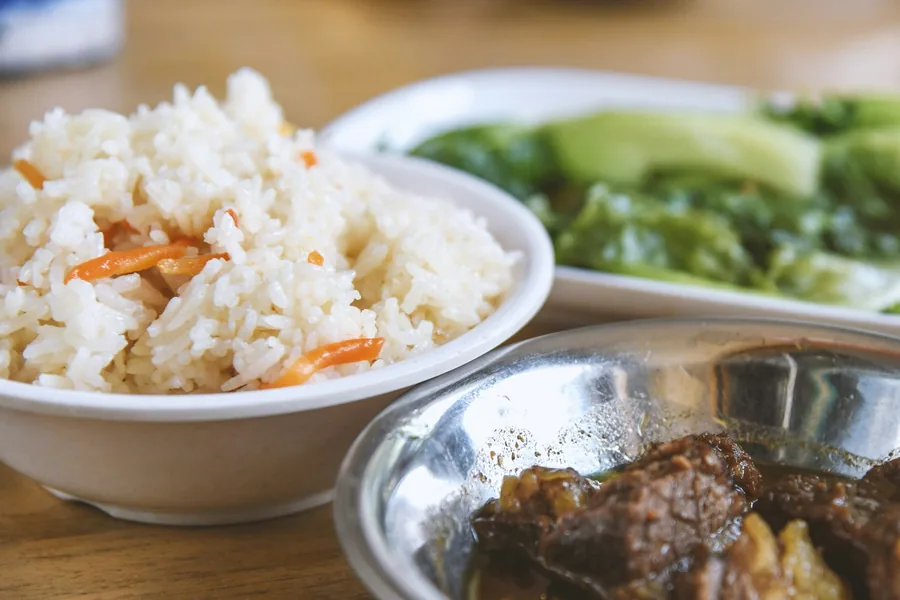
That covers most of the menu. If you are ordering a main dish from one of the protein sections, the starch is already handled and you do not need to add anything.
The two that surprise people
Chow mein comes with rice. Lo mein does not. Both are noodle dishes, they sit next to each other on most menus, and they are treated completely differently.
The reason is historical rather than logical. On American Chinese menus chow mein has long been served as a plated meal with rice alongside, while lo mein is treated as the starch in its own right. On this menu, the chow mein section says white rice; the lo mein section simply says soft noodles.
If you have ever wondered why an order of chow mein arrived with a container of rice you did not expect, that is why. The comparison of lo mein and chow mein covers how the two dishes differ beyond the rice question.
Where rice is not included
- Appetizers — egg rolls, ribs, dumplings and wings are starters, not meals.
- Soups — ordered by the small or large, on their own.
- Lo Mein and Chow Mei Fun — noodle sections, so the noodles do the job.
- Fried Rice — it is the rice.
- Drinks and side orders — this is where extra rice lives if you want more.
Two sections on this menu carry no note either way: the house specials and the Special Chinese American Dishes, which is the wings, fried chicken, fried shrimp and fries part of the menu. If what comes with those matters to your order, it is worth a quick question on the phone.
What a dinner special includes
This is the section where the most arrives for one item. The dinner specials are listed as served with pork fried rice and an egg roll or soup — so an entrée, a starch and a starter in a single order.
That makes them the easiest thing to order for one person, and the easiest thing to over-order alongside. If two people each take a dinner special, you already have two egg rolls or two soups and a good deal of rice. The guide to how dinner specials work goes through the whole section.
How this changes what you should order
The practical consequence is that most tables order more starch than they need. If four people each pick an entrée, four portions of white rice arrive with them — and then somebody adds a large fried rice on top.
- Count the rice you are already getting before adding any more.
- Order fried rice as a dish, not a side, if you want it — it is seasoned and stands on its own.
- Mix noodle and entrée orders so the table gets both textures rather than three containers of rice.
- Ask about swapping if you would rather have fried rice than white with an entrée.
The comparison of white rice and fried rice covers when each one is the better choice, and how much to order per person puts numbers on it.
Why white rice is the default
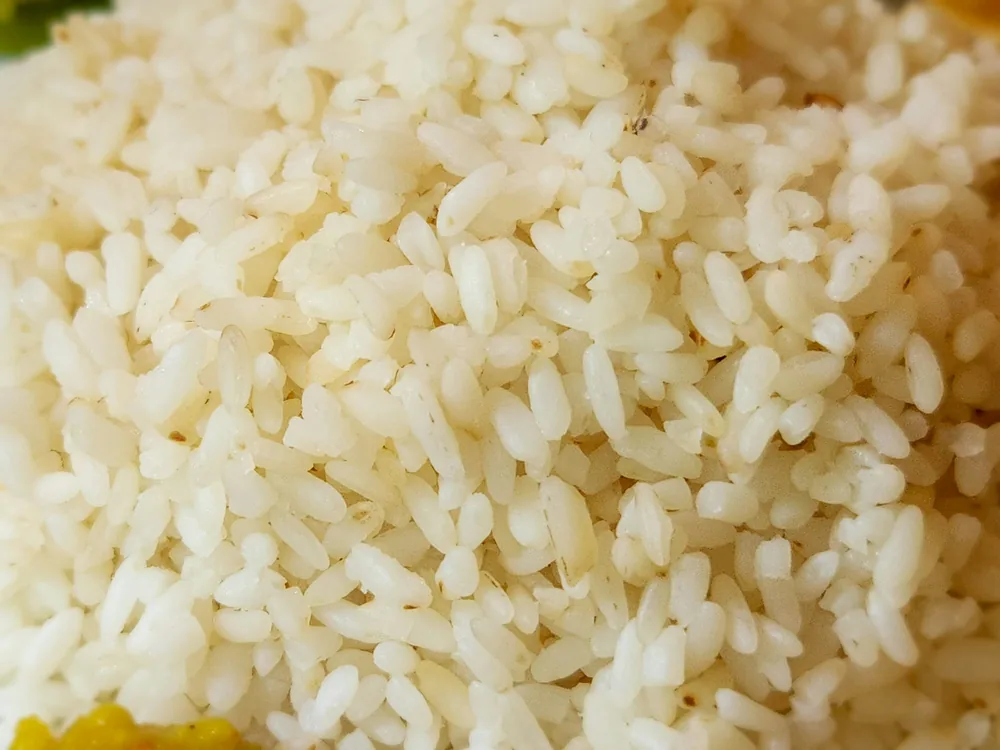
Plain steamed rice exists on the plate to do a job: to carry sauce without competing with it. That is why it is the default alongside a saucy entrée and why fried rice, which is already seasoned, is treated as a dish rather than a side.
It is also the cheapest way for a kitchen to make a dish into a meal, which is how the convention settled in the first place. Much of what shapes an American takeout order comes down to packaging and practicality of this kind — the history of takeout food covers how much of it was driven by how the food travels.
What to check before you order
Three quick questions cover almost every case, and all three are faster to ask than to guess.
- Does this dish come with rice, and is it white or fried?
- Can I swap the rice, and is there a difference in price?
- For a combination plate: what exactly is included?
Where to look on the menu
Every section note quoted above is on the full menu, at the top of each section. The fried rice and lo mein sections are where the starch lives as a dish in its own right, and the dinner specials are where the most arrives for one order. If the wording on a menu is what is slowing you down, the menu glossary covers the rest.
Frequently asked questions
Does Chinese food come with rice?
Usually, but it depends on the section of the menu. Most entrée sections list white rice as included by default. Noodle dishes generally do not come with rice, because the noodles are the starch.
Do lo mein and chow mein come with rice?
They differ, and this catches people out. On the Panda Li’s Kitchen menu the chow mein section is listed as served with white rice, while the lo mein section is described simply as soft noodles.
What comes with a dinner special?
On this menu the dinner specials are listed as served with pork fried rice and an egg roll or soup, so the starch and a starter are both included in the one item.
Can I swap white rice for fried rice?
Many kitchens allow it, sometimes for a small difference. It is worth asking when you order rather than assuming either way, since policies vary between restaurants.
The bottom line
Entrées come with white rice. Noodles do not, except chow mein, which does. Dinner specials bring fried rice and a starter as well. Count what is already coming before you add another starch.
Every section note is printed at the top of its section on the menu.
Browse the full menu