Almost every Chinese takeout order comes down to this at some point: rice or noodles. Both are stir fried, both come with the same choice of proteins, and both can work as a main dish or as something to share. The right answer depends less on flavour than on how you are eating.
The short answer
Fried rice is drier, packs more densely and shares better across a table. Lo mein is softer, saucier and eats more like a meal in itself. If you are ordering several dishes for a group, fried rice usually stretches further. If you want one satisfying container to yourself, lo mein is the more complete dish.
What you are actually getting
Fried rice
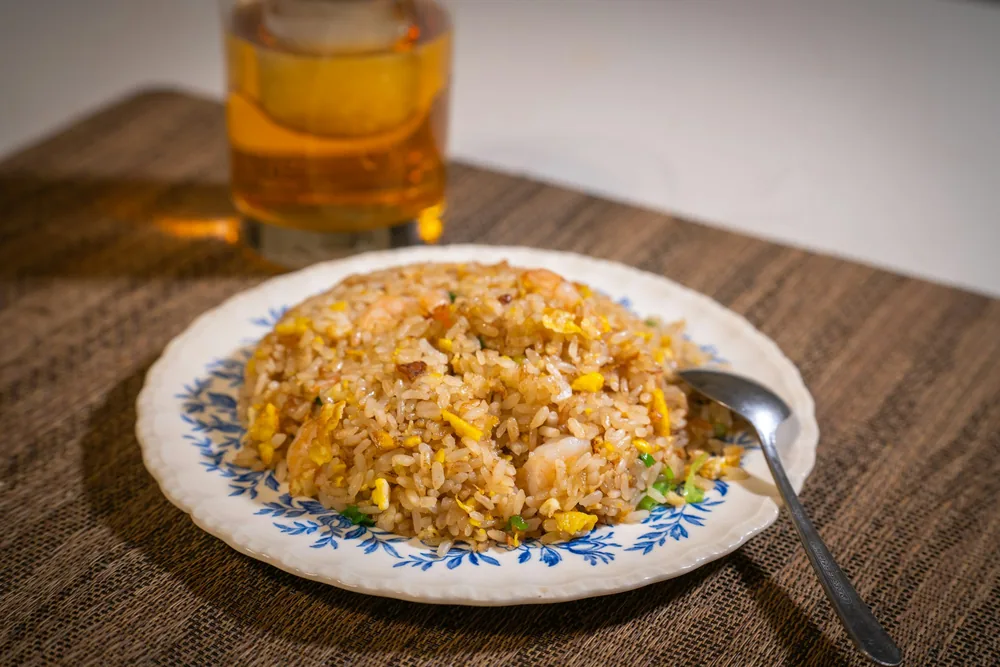
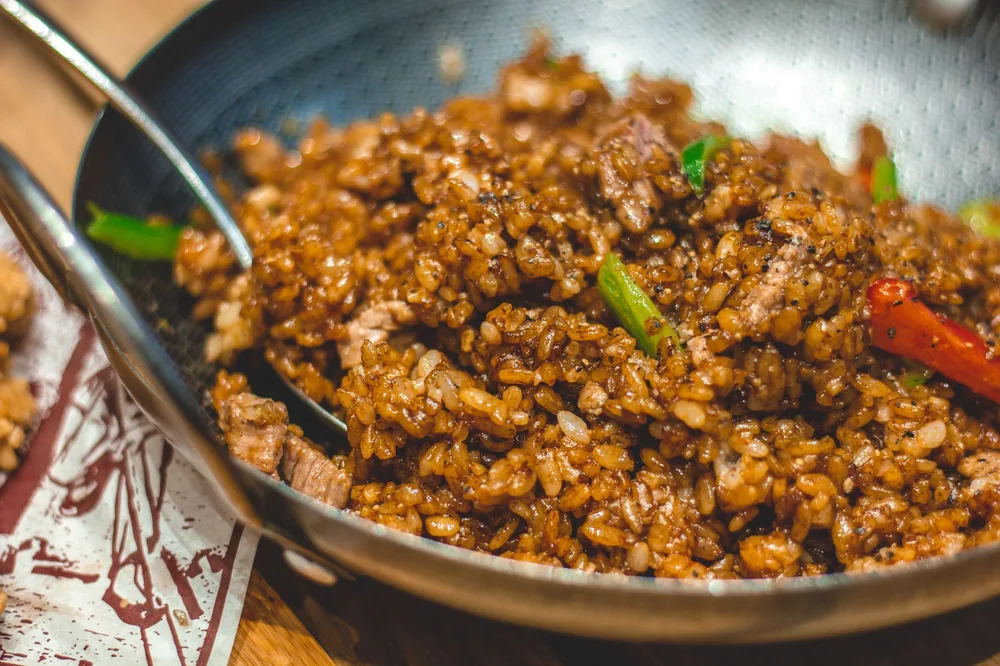
Cooked rice is stir fried at high heat with egg, aromatics, a protein and usually a small amount of vegetables. The aim is separate, distinct grains with a light seasoning rather than a heavy sauce. It is drier than lo mein by design, which is what makes it a good companion to a saucy entrée.
Lo mein
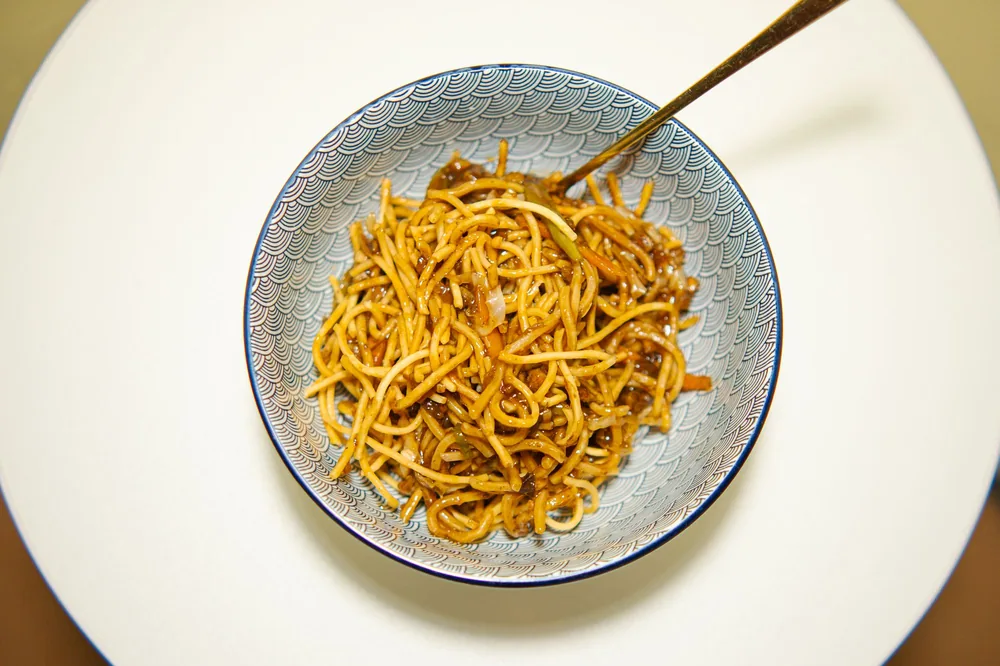
Wheat noodles are boiled, then tossed with sauce, vegetables and a protein. The noodles carry the sauce all the way through, so the dish arrives glossier and more strongly seasoned. It is closer to a self-contained meal than fried rice is.
Fried rice vs lo mein at a glance
| Fried Rice | Lo Mein | |
|---|---|---|
| Base | Stir fried rice | Boiled wheat noodles, tossed |
| Texture | Dry, separate grains | Soft, slippery, coated |
| Seasoning | Lighter | Saucier and more pronounced |
| Sharing | Excellent — portions out cleanly | Good, though it tangles when served |
| As a solo meal | Works, especially house special | Very good — feels complete |
| With a saucy entrée | Pairs well; soaks up sauce | Can compete with the entrée |
| Leftovers | Reheats reliably | Softens further overnight |
Ordering for one
If the container is going to be your whole dinner, lo mein tends to be the more satisfying choice. The sauce means it does not need anything alongside it, and the noodles feel more substantial than the same volume of rice.
Fried rice works as a solo meal too, particularly the house special version, which combines more than one protein and eats more like a complete dish than the single-protein versions do.
The house special versions
Both sections carry a house special option, and it is the one worth knowing about. House special means the dish contains more than one protein — usually a combination of chicken, roast pork, beef and shrimp — rather than a single one.
That matters for two reasons. It makes either dish substantial enough to eat alone, and it solves the problem of ordering for someone whose preference you do not know. If you are picking one container to be a whole meal, the house special version of either is the safer choice.
It is also the most efficient way to cover a table with mixed tastes without ordering more dishes. One house special fried rice alongside two entrées gives four people a genuine range without four separate orders.
Ordering for a group
This is where fried rice earns its place. Rice portions out cleanly onto plates, it does not tangle, and because it is drier it sits happily under whatever sauced dishes are going around the table. A large fried rice in the middle of a table of entrées does more work than a large lo mein.
That does not mean skipping noodles entirely. A common approach is one rice and one noodle dish for a table of four or more, so nobody has to choose.
What to consider when ordering
- How many sauced dishes are you getting? The more sauce on the table, the more you want rice rather than noodles.
- Is this dinner or a side? Lo mein as a main, fried rice as a shared base.
- How far is the delivery? Both travel well, but fried rice is the more forgiving of the two.
- Are you reheating tomorrow? Fried rice comes back better the next day.
Finding both on the menu
At Panda Li’s Kitchen in Orlando, the fried rice section and the lo mein section are separate parts of the menu, with most items offered in small and large. If you are ordering for several people, the family sizes in the fried rice section are the practical option.
For a third route, the mei fun section uses thin rice noodles instead of wheat, which gives you a lighter noodle without the sauce weight of lo mein.
A note on rice
Fried rice is traditionally made with rice cooked in advance and cooled, because freshly cooked rice carries too much moisture to fry cleanly. Cooked rice is also one of the foods public-health agencies single out for careful cooling and storage; the US Centers for Disease Control and Prevention covers why that matters if you are keeping leftovers.
Frequently asked questions
Is fried rice or lo mein a bigger portion?
They are usually sold in comparable small and large sizes, but rice packs more densely than noodles, so a large fried rice often feeds more people than a large lo mein. If you are ordering one starch for a table, rice tends to stretch further.
Which is better for leftovers?
Fried rice. It reheats well and does not change texture much. Lo mein noodles tend to absorb the remaining sauce overnight and soften further, though many people prefer them that way.
Can fried rice be a main dish?
Yes. House special fried rice, which combines more than one protein, is substantial enough to eat on its own. The plainer versions work better as something to share alongside entrées.
Should I order rice or noodles with a saucy entrée?
Plain steamed rice is the usual pairing for a saucy entrée because it soaks up sauce without competing with it. Fried rice and lo mein are both already seasoned, so pairing either with a heavily sauced dish can make the meal feel one-note.
The bottom line
Eating alone and want one container to do the job? Lo mein. Feeding a table with several dishes going around? Fried rice. Ordering for four or more? Get one of each and stop debating it.
If you are choosing between noodle types rather than rice versus noodles, the comparison of lo mein and chow mein covers that decision.
Compare rice and noodle options with current sizes on the full menu.
Explore fried rice options