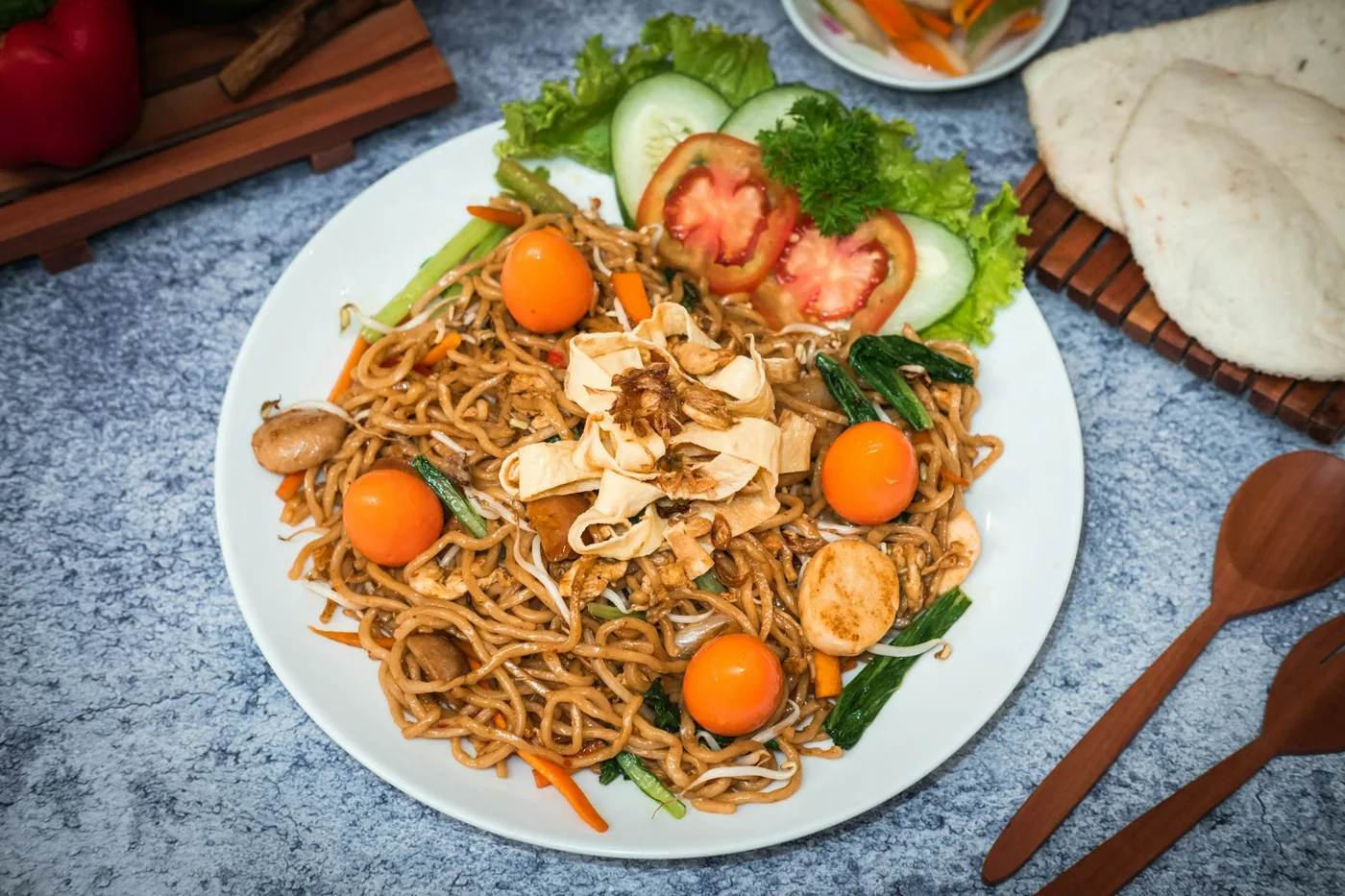
Mei fun sits on most Chinese takeout menus in its own small section, usually between the noodles and the rice. It is the least ordered of the three noodle styles, mostly because people are not sure what they are getting.
The short answer
Mei fun is a thin rice noodle, stir fried rather than served in sauce. The strands are about the thickness of vermicelli, they are made from rice rather than wheat, and the finished dish is noticeably lighter and drier than lo mein. If lo mein is a bowl of saucy noodles, mei fun is closer to a plate of noodles with things stir fried through them.
What mei fun actually is
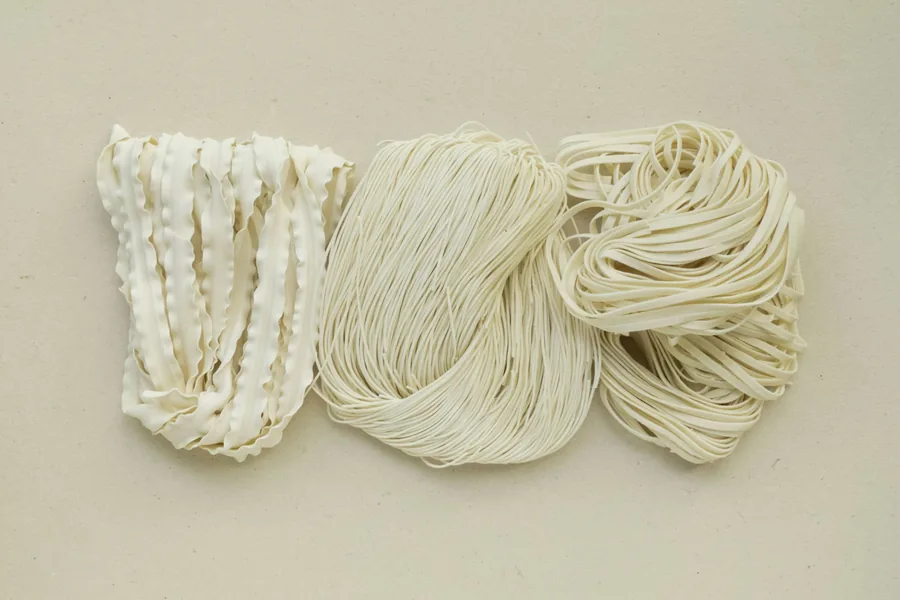
The name is Cantonese. Mei fun refers to rice vermicelli — fine, brittle white noodles made from rice flour and water. They come dried, are softened in water before cooking, and then go into the wok with a protein and vegetables.
Because the strands are so fine, they cook in moments and pick up seasoning quickly. They also do not hold heavy sauce the way wheat noodles do, which is why a mei fun dish arrives looking drier and more separated than lo mein.
How it compares to the other noodles
| Mei Fun | Lo Mein | Chow Mein | |
|---|---|---|---|
| Made from | Rice flour | Wheat flour | Wheat flour |
| Strand | Very thin, vermicelli-like | Thick and round | Thin to medium |
| Texture | Light, springy, dry | Soft and slippery | Drier, often browned or crisp |
| Sauce | Light seasoning, not saucy | Saucy throughout | Light seasoning |
| Weight of the dish | The lightest of the three | The heaviest | In between |
| Best for | A lighter noodle plate | A saucy noodle bowl | Texture and browning |
Singapore mei fun, explained
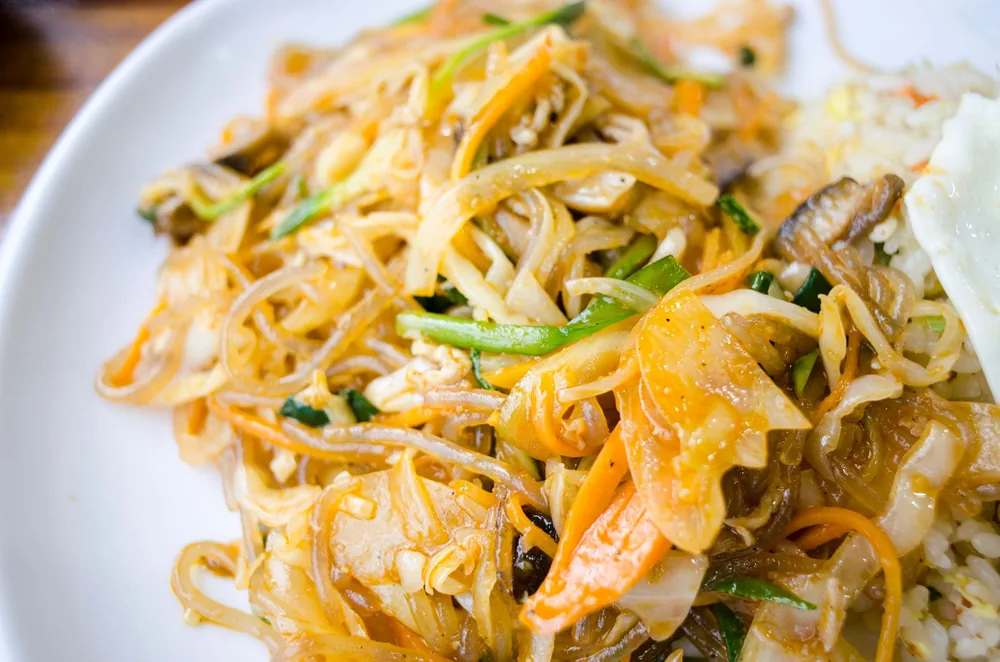
The version people ask about most is Singapore mei fun: the same thin rice noodles, seasoned with curry powder, which turns the whole plate a pale yellow. It is aromatic rather than fiery, and it is the most distinctive thing in the section.
The name is misleading. Singapore mei fun is not a Singaporean dish — it is generally traced to Hong Kong, where curry powder was a familiar pantry item, and it spread from there through Cantonese restaurants around the world.
When to order mei fun
- You find lo mein too heavy. Mei fun gives you noodles without the sauce weight.
- You are ordering several sauced dishes. A dry noodle plate balances a table that is already rich.
- You want something different. Singapore mei fun is the most distinctive noodle plate on most menus.
- You are eating it later. Rice noodles hold their shape reasonably well, though they firm up in the fridge.
When to order something else
Mei fun is not the right call if you want a saucy bowl of noodles — that is lo mein. It is also not ideal for a table that wants one big shared starch, because the fine strands tangle and portion less cleanly than rice does. For that job, fried rice is the better centrepiece.
Finding it on the menu
At Panda Li’s Kitchen in Orlando, mei fun has its own section on the chow mei fun part of the menu. If you want to compare it against the wheat noodles before deciding, the lo mein section and the chow mein section sit nearby on the same menu.
A note on the noodle itself
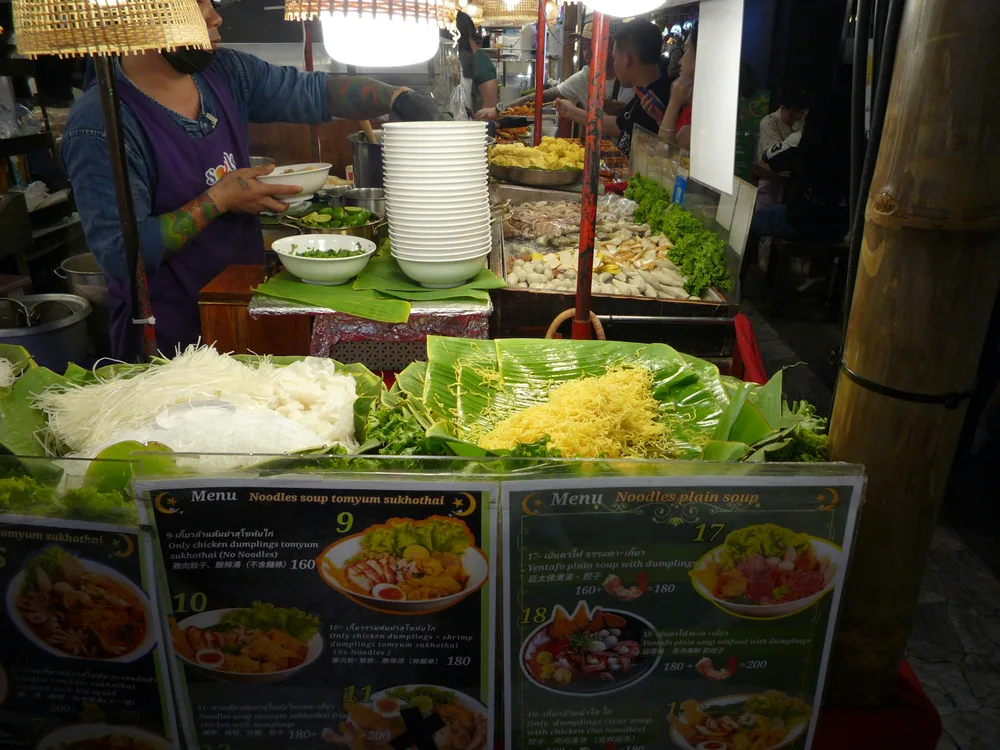
Rice vermicelli is used well beyond Chinese cooking — it turns up across Southeast Asia in soups, salads and spring rolls, prepared in quite different ways. The background on rice vermicelli gives a sense of how widely the same noodle travels.
How mei fun is cooked
The technique explains the texture. Dried rice vermicelli is soaked in warm water rather than boiled hard, because the strands are fine enough that boiling turns them to paste. Once pliable, they are drained thoroughly and go into a very hot wok.
From there it is fast. The noodles are tossed with the protein, vegetables and seasoning for a short time and served. Because there is very little liquid involved, the strands stay separate rather than clumping, which is the mark of a well-made plate of mei fun.
It also explains why mei fun does not travel quite as forgivingly as lo mein. Without much sauce, the noodles can dry out if they sit for a long time, so it is at its best eaten reasonably soon after it is cooked.
Common mistakes when ordering rice noodles
- Expecting a saucy bowl. Mei fun is a dry-style noodle plate. If you want sauce, order lo mein instead.
- Assuming Singapore mei fun is spicy. Curry powder is aromatic, not hot. The heat, if any, is mild.
- Ordering it as the shared starch for a big table. Fine strands tangle and portion awkwardly onto plates. Fried rice is the better centrepiece.
- Assuming rice noodles are automatically suitable for a gluten-free diet. The noodle itself is rice, but sauces and shared equipment are part of the finished dish. Ask the restaurant.
Mei fun beyond the Chinese menu
The same noodle appears widely across Southeast Asia under different names and in quite different preparations — in soups, in cold salads, and rolled inside fresh spring rolls. Recognising it on a Chinese menu makes it easier to spot elsewhere, and gives you a sense of how versatile the strand is compared with a wheat noodle.
Frequently asked questions
Is mei fun the same as lo mein?
No. Mei fun is made from rice, and lo mein is made from wheat. Mei fun strands are much thinner, drier and lighter; lo mein noodles are thick, soft and coated in sauce.
Is mei fun gluten free?
Rice noodles themselves are made from rice flour, but a finished restaurant dish also involves sauces, a shared wok and other ingredients. If you avoid gluten, ask the restaurant directly about the specific dish rather than assuming.
What is Singapore mei fun?
It is a stir fry of thin rice noodles seasoned with curry powder, which gives it its yellow colour. Despite the name it is not from Singapore — it is a Hong Kong creation that spread through Cantonese restaurants.
Is mei fun spicy?
Usually not. The plain versions are mild. Singapore mei fun is seasoned with curry, which is aromatic rather than hot, though the heat level varies by kitchen.
The bottom line
Mei fun is the light option in the noodle section: thin rice strands, stir fried, not swimming in sauce. If you have been ordering lo mein by default, it is worth one order to see whether you prefer the lighter plate.
Still weighing noodles against rice? The comparison of fried rice and lo mein covers that decision in more detail.
Mei fun sits in its own section of the menu, with seven varieties to choose from.
See the mei fun section