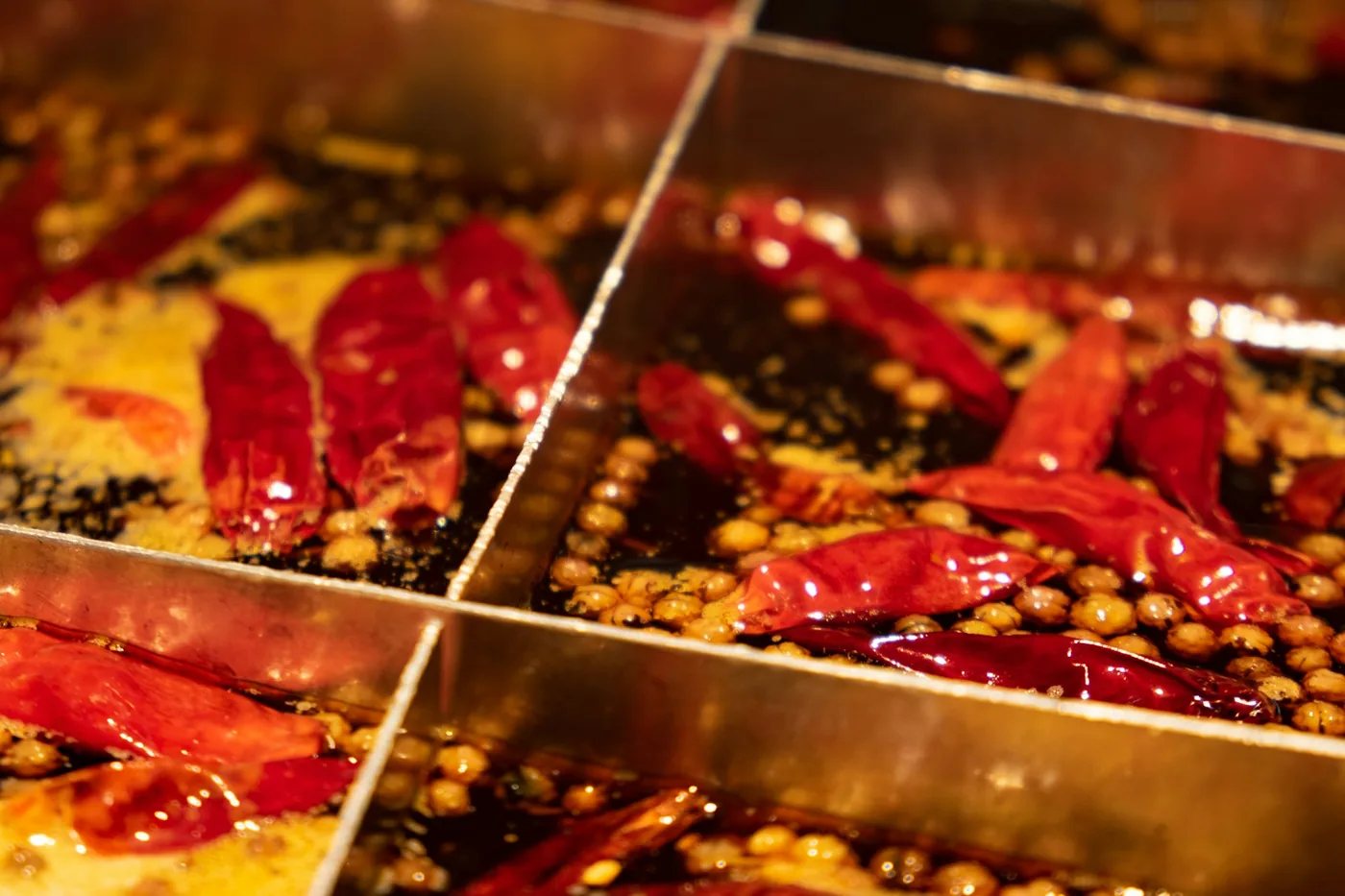
Most Chinese takeout menus tell you exactly which dishes are spicy, but they do it in a language regular customers have absorbed and everyone else has to guess at. Two words carry most of that signal: Szechuan and Hunan.
The short answer
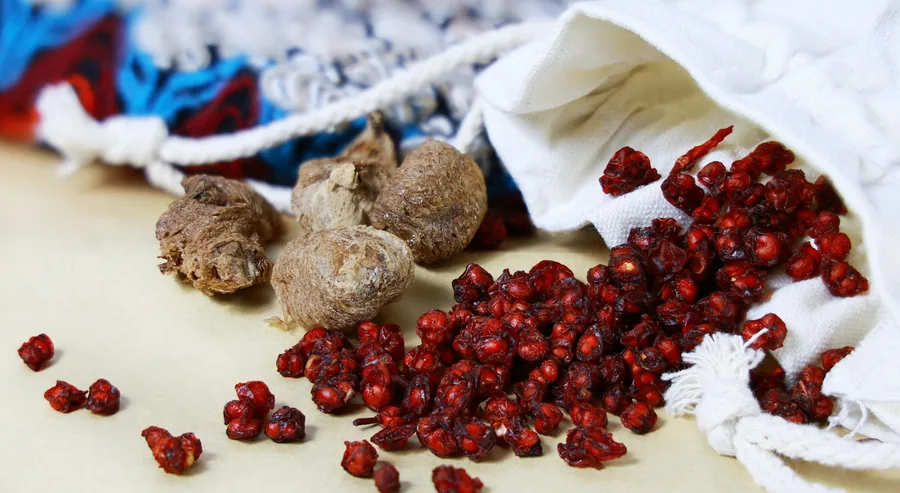
Both indicate a spicy dish. Szechuan cooking is associated with Sichuan peppercorns, which add a tingling, slightly numbing sensation alongside chilli heat. Hunan cooking is associated with a straighter, drier chilli heat without that numbing quality. On an American menu, either word is a reliable warning that the dish carries chilli.
Szechuan, explained
Szechuan — also spelled Sichuan — refers to a province in southwest China with one of the most distinctive regional cuisines in the country. Its signature is the combination of chilli heat with Sichuan peppercorn, which is not a chilli at all and produces a tingling, mouth-numbing effect quite unlike ordinary spiciness.
That combination is why Szechuan dishes can taste complex rather than simply hot. On American menus the style is usually simplified, but the association with heat holds.
Hunan, explained
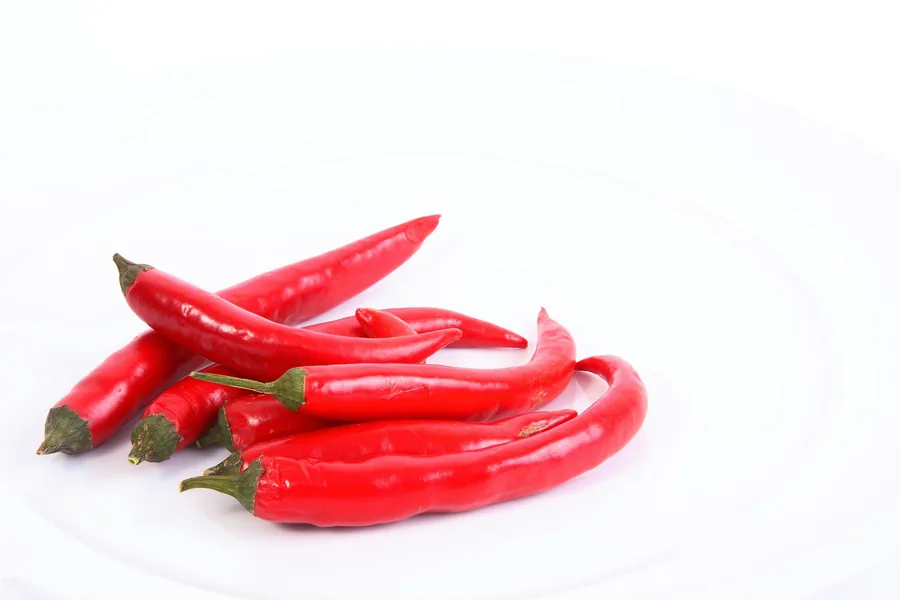
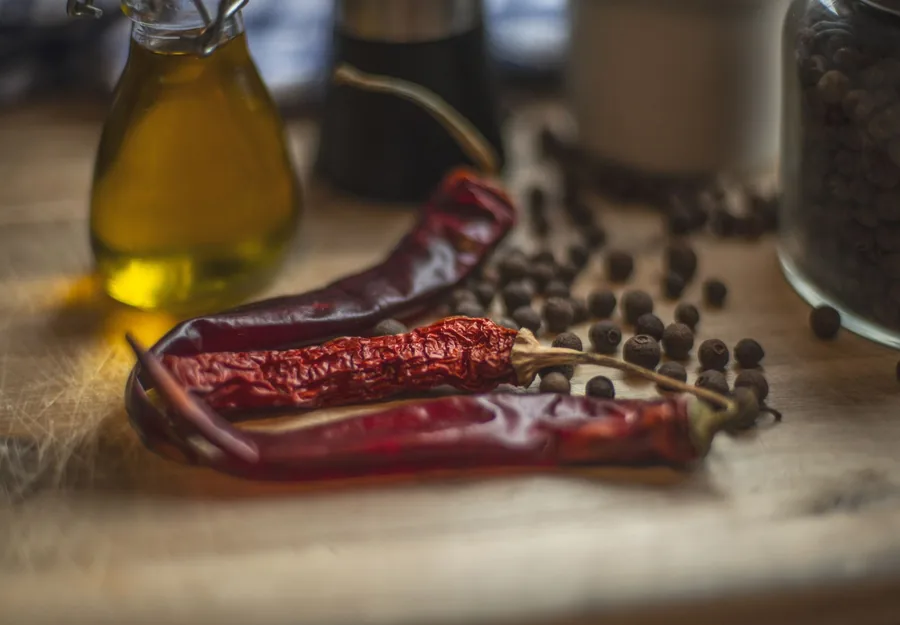
Hunan is the neighbouring province, and its cooking is also chilli-forward but generally without the numbing element. The heat tends to read as drier and more direct, often alongside sour and smoky notes rather than the layered effect of a Szechuan dish.
In practice, on an American Chinese menu, the difference between the two is smaller than it would be in China. Both mean the same thing to a customer deciding what to order: this dish has chilli in it.
The other words that signal heat
Szechuan and Hunan are the obvious ones. Several others are just as reliable and catch people out more often, because they do not sound like heat warnings.
| Menu term | What it usually signals | On this menu |
|---|---|---|
| Szechuan | Chilli, often with a numbing quality | Every Szechuan dish is marked spicy |
| Hunan | Direct, dry chilli heat | Every Hunan dish is marked spicy |
| Garlic sauce | A savoury sauce that usually includes chilli | Every garlic sauce dish is marked spicy |
| Curry | Aromatic spice, with heat that varies | Curry dishes are marked spicy |
| Kung Po | Chilli, traditionally with peanuts | Kung Po dishes are marked spicy |
| Mongolian | Usually sweet and savoury, but varies | Marked spicy here |
| Ma Po | A Sichuan tofu dish, characteristically hot | Marked spicy here |
| Hot and sour | Sour first, with warmth from white pepper | Marked spicy here |
The surprises
Two things routinely catch people out. The first is garlic sauce, which sounds savoury and mild and is very often neither. On this menu, beef, chicken, pork, shrimp and broccoli garlic sauce dishes are all marked spicy.
The second is that a dish’s general reputation and a specific restaurant’s preparation can differ. Orange chicken is widely thought of as the mild, sweet option, but it is marked spicy on this menu. The marking on the menu in front of you beats the dish’s reputation every time.
How to order if you do not want heat
- Skip the signal words. Szechuan, Hunan, garlic sauce, curry, Kung Po and Ma Po.
- Look to the broccoli and vegetable dishes. Beef with broccoli, chicken with broccoli and moo goo gai pan are all unmarked on this menu.
- Sweet and sour is reliably mild. The sauce is sweet and tangy rather than hot.
- Ask when you order. Many stir fried dishes can be adjusted; sauce-based ones are harder.
How to order if you do want heat
The beef section has the highest concentration of spicy dishes on this menu, with Hunan beef, beef with garlic sauce, beef with curry sauce, beef Szechuan style and Mongolian beef all marked. The seafood section follows closely with Szechuan shrimp, shrimp Hunan style, Kong Po shrimp, curry shrimp and shrimp with garlic sauce.
For something meat-free with real heat, the vegetable section lists Ma Po tofu, curry tofu and broccoli with garlic sauce, all marked spicy.
Where these cuisines come from
Sichuan and Hunan are two of China’s major regional cooking traditions, both far broader than the dishes that reached American menus. The Britannica entry on Sichuan gives background on the province those flavours come from.
Heat by section on this menu
If you are scanning a menu for the parts to approach with caution, it helps to know where the chilli concentrates. It is not spread evenly.
| Section | Spicy dishes | Notes |
|---|---|---|
| Beef | Five of ten | The most consistently spicy section |
| Seafood | Five of twelve preparations | Szechuan, Hunan, Kong Po, curry and garlic sauce |
| Pork | Five of eight | Includes Mongolian pork and double cook pork |
| Chicken | Five of thirteen | The widest range from mild to hot |
| Vegetables | Four of eight | Ma Po tofu, curry tofu, orange tofu, broccoli with garlic sauce |
| Soups | One of nine | Hot and sour soup |
| Noodles and rice | None marked | Lo mein, chow mein, mei fun and fried rice are all unmarked |
The practical read: the noodle and rice sections are the reliably mild parts of the menu, and pork and beef are where heat is most likely. If you are ordering for a group with low heat tolerance, building the meal around noodles, rice and the unmarked chicken dishes is the safest route.
Heat is not the same as flavour
One misconception worth clearing up: ordering the mild version of a dish does not mean ordering a blander one. Most of the depth in these dishes comes from the savoury base — soy, garlic, ginger, fermented sauces — rather than from the chilli sitting on top of it.
That is why beef with broccoli and moo goo gai pan are not lesser dishes than their spicy neighbours. They are built on the same foundations without the chilli layer.
Frequently asked questions
Which is spicier, Szechuan or Hunan?
Both are properly spicy. The usual distinction is the character of the heat rather than the amount: Szechuan cooking is associated with Sichuan peppercorns, which add a tingling, numbing quality alongside chilli, while Hunan cooking is associated with a straighter, drier chilli heat without that numbing note.
Does garlic sauce mean a dish is spicy?
Often, yes. Garlic sauce on American Chinese menus usually carries chilli. On the Panda Li’s Kitchen menu, every garlic sauce dish is marked spicy, so it is a reliable signal on this menu.
What does the spicy marking on a menu actually mean?
It is the kitchen telling you the dish is made with chilli. It is not a calibrated scale, and one restaurant’s spicy is not another’s. Treat it as a yes-or-no flag and ask if you need detail.
Can I ask for a spicy dish to be made mild?
It is always worth asking. Many kitchens can adjust the chilli in a stir fried dish. Dishes where the heat is built into a pre-made sauce are harder to change, so ask when you order rather than assuming.
The bottom line
Szechuan means chilli with a numbing edge. Hunan means chilli, straight. Garlic sauce, curry, Kung Po and Ma Po all mean heat too, whatever they sound like. Learn those six words and you can read the heat on almost any Chinese menu before you order.
Spicy dishes are marked throughout the menu, section by section.
Browse the full menu